
Five of Queen Elizabeth II’s most iconic outfits – from new royal exhibit
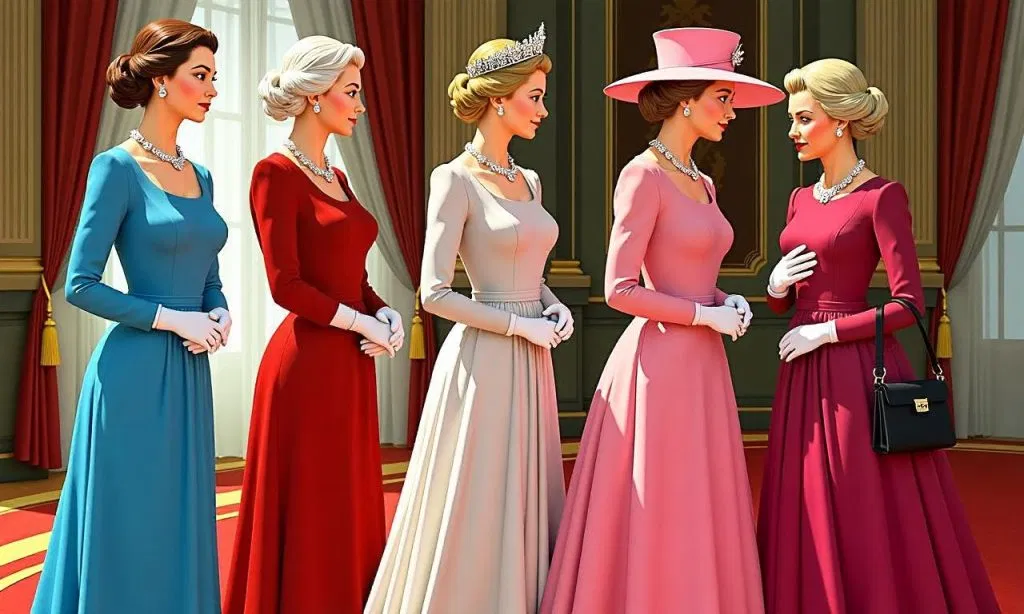
Five of Queen Elizabeth II’s Most Iconic Outfits – From New Royal Exhibit
Her Timeless Style and National Symbolism
Queen Elizabeth II, a figure of enduring global recognition, maintained a signature aesthetic throughout her 70-year reign. Her wardrobe—marked by restraint and traditionalism—carried a distinct visual identity, whether through the refined simplicity of her everyday attire or the grandeur of ceremonial outfits. A recent display at The King’s Gallery in Buckingham Palace highlights this, featuring 200 items spanning her 10 decades of public life and commemorating the centenary of her birth on 10 April. The exhibition traces the evolution of British society alongside her fashion choices, which often carried subtle diplomatic undertones.
British Heritage in Everyday Wear
One standout piece from the collection is a Harris tweed jacket and Balmoral Tartan skirt, first worn by the Queen in the 1950s. This ensemble became a recurring element in her off-duty wardrobe, blending functionality with a sense of national pride. Royal fashion expert Marian Kwei notes that the design intentionally promoted British craftsmanship and cultural values, embedding messages of stability and soft power within its modest appearance.
“It’s ‘I’m in charge’, without being too loud about it,” Kwei explains. “The fabrics and cut were meant to reflect dependence on British excellence, even as the tones remained understated.”
Coronation Dress and Commonwealth Unity
The 1953 Coronation dress, crafted by Norman Hartnell, showcases silk from Kent and intricate embellishments like gold bugle beads and pearls. Its significance lies not just in the quality of British design but in its symbolic representation of the United Kingdom and its global allies. The gown incorporates emblems of the four UK nations and requests from the Queen to include Commonwealth symbols such as the Canadian maple leaf and India’s lotus flower, as noted by Kwei.
“The gown was pretty much a nod to Britain and the Commonwealth,” Kwei says. “It’s a visual testament to how she reigned, bridging tradition and international connection.”
A Divisive Statement on Transatlantic Relations
In 1957, the Queen donned a sleeveless green gown for a state banquet honoring US President Dwight Eisenhower in Washington DC. While its elegance is undeniable, its symbolic meaning remains debated. Curator Caroline de Guitaut remarks on its divisive nature, questioning whether the design explicitly referenced American culture or simply projected British sovereignty with a touch of familiarity.
“It’s absolutely beautiful,” de Guitaut says. “But I can’t see an overt message in it. Still, its ‘apple crisp green’ hue might subtly connect to America’s cultural imagery, like New York’s nickname ‘The Big Apple’ or the iconic American Pie.”
Legacy in Modern Design
Though the Queen’s sartorial choices often emphasized tradition, their influence extends into contemporary fashion. Exhibition curator Caroline de Guitaut highlights how Miu Miu’s 2024 Balmoral collection reimagined her tartan kilts, proving the enduring relevance of her style. Elizabeth Holmes, a royal fashion commentator, adds that early in her reign, the Queen used clothing to redefine her image, presenting herself as a glamorous yet authoritative global leader. Hartnell’s designs, with their fitted waists and flowing skirts, underscored her femininity while projecting regal composure.
