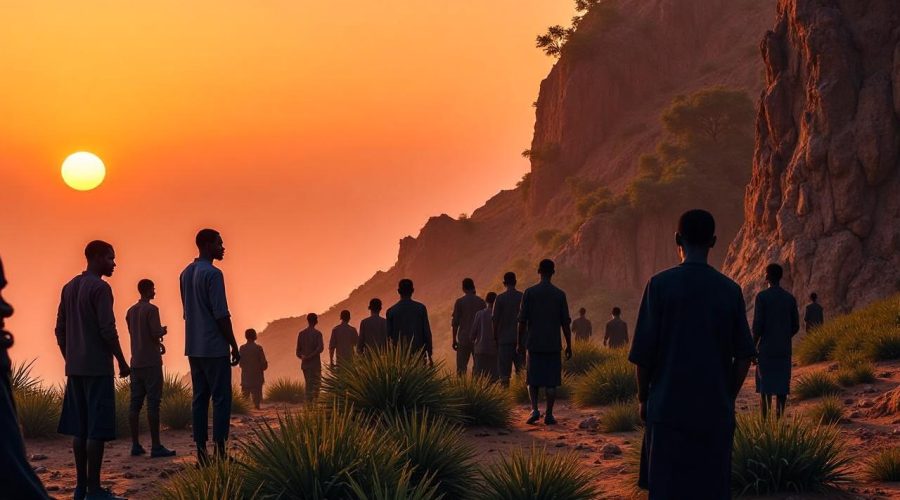
Hundreds of Captives Freed from Boko Haram Mountain Hideout
Hundreds of captives freed from Boko – Over 360 individuals, seized by Boko Haram militants in March, have been released after being held in a remote mountain hideout in Nigeria’s northeastern Borno state. The majority of the hostages originated from Ngoshe, a predominantly Muslim community near the border with Cameroon. The operation, hailed as a major success by authorities, has sparked debate over the exact circumstances of their liberation. While the military credits an intelligence-driven mission that took weeks to plan, a local advocacy group disputes this, asserting that the captives were freed through a mediated agreement.
Dispute Over the Rescue Method
According to the Nigerian military, the operation was a swift and unexpected strike on Boko Haram’s Mandara mountain hideout, conducted under the cover of darkness. Lt-Col Haruna M Sani, a military spokesperson, described it as one of the nation’s most critical hostage recovery efforts, emphasizing the precision and speed of the forces involved. “Several insurgents surrendered or fled into the surrounding terrain as the troops advanced with overwhelming force,” he stated in a statement.
“Faced with the speed, precision, and overwhelming combat power of the advancing troops, several insurgents abandoned their positions and fled into surrounding mountainous terrain, while others surrendered,” said Lt-Col Haruna M Sani.
In contrast, the Borno South Youth Initiative, a local group, claims it played a key role in securing the captives’ unconditional release. Samaila Kaigama, the group’s president, noted that his organization had been actively negotiating with the militants for weeks. “Our efforts were overshadowed by government officials who claimed the operation was their achievement,” he remarked, criticizing the lack of recognition for local advocates.
The Ransom Economy and Boko Haram’s Tactics
Kidnapping for ransom has become a standard practice across Nigeria, with armed groups targeting vulnerable communities. Boko Haram, infamous for its 2014 Chibok abduction of over 200 schoolgirls, continues to exploit this strategy. At the time, the group forced captives into sexual slavery, domestic servitude, or used them as suicide bombers. While the law prohibits paying ransoms, families, intermediaries, and even state agencies often do so to secure the release of loved ones.
Analysts highlight how these ransom payments fuel the insurgency. “The financial incentives created by kidnappings have sustained Boko Haram’s operations, even as it loses ground,” one expert noted. The group’s tactics extend beyond Islamic extremism, targeting schools, churches, mosques, and remote villages—areas where captives are more likely to be isolated and desperate.
Medical Care and Casualties
Following the operation, authorities confirmed that the freed captives are receiving medical attention. However, two infants succumbed to exhaustion and harsh conditions during their captivity, as reported by Daniel Bwala, a special adviser to President Bola Tinubu. “Tragically, two young children lost their lives due to the brutal environment they endured,” Bwala shared on X, acknowledging the challenges faced by the hostages.
Despite these losses, the government praised the military’s performance, attributing the success to improved coordination and strategic planning. “The troops executed the mission with remarkable efficiency,” Bwala added, while noting the broader criticism the administration faces for persistent insecurity in the region.
The Attack and Its Timing
The March attack on Ngoshe occurred as residents were breaking their Ramadan fast, according to local reports. This timing may have made the community more susceptible to sudden assault. Samaila Kaigama, president of the Borno South Youth Alliance, described the incident as a calculated move by the militants. “The timing was deliberate, aiming to maximize the psychological impact on the community,” he explained.
He also pointed out the government’s slow response to the crisis, stating that his group had been working tirelessly to secure the captives’ release. “We’ve been in contact with the militants for days, but the military only acted after we made the necessary arrangements,” Kaigama said. His remarks underscore the complex dynamics between local activists and national forces in combating the insurgency.
Media Coverage and Public Reaction
On the day of the rescue, the military released videos and photos of the freed captives gathered under trees in the early hours of Sunday morning. These visuals were shared widely, with several news outlets reporting the event. A local official also appeared in a video, emphasizing the authorities’ commitment to restoring safety. “We are doing everything possible to ensure the area is secure so families can return to their homes,” the official stated, while adding that some captives may have fled into Cameroon.
Efforts are ongoing to locate those who escaped, with the government working to facilitate their safe return. The incident has reignited discussions about the effectiveness of ransom payments in deterring such attacks. While critics argue that these tactics enable the cycle of violence, supporters claim they provide essential resources for security forces.
Boko Haram’s Evolving Threat
Since its inception in 2009, Boko Haram has grown from a regional insurgency into a transnational threat. Although it no longer controls vast territories as it once did, the group remains active and dangerous, with splinter factions continuing to destabilize communities. Recent operations, including a joint mission with the United States, have targeted key figures in the Islamic State (IS) network. Last month, Nigerian and American forces killed a senior IS leader, marking a significant step in countering the group’s influence.
The US military’s involvement in Nigeria has intensified in recent years, with a small contingent deployed to train local forces and enhance intelligence capabilities. This collaboration aims to address a range of security challenges, including Islamist extremism, kidnapping gangs, land disputes, and separatist movements. “The partnership is crucial for tackling the multifaceted threats facing the region,” a US military official stated, highlighting the shared goals of stability and security.
As the situation in Borno state continues to evolve, the focus remains on preventing future abductions and ensuring the recovery of those still missing. The release of 360 to 416 captives has offered a glimmer of hope, but it also serves as a reminder of the ongoing struggle against Boko Haram and its affiliated groups. For now, the hostages are on their way home, with their journey symbolizing both the successes and setbacks of Nigeria’s security efforts.
Follow BBC Africa on Twitter, Facebook, or Instagram for more updates on developments across the continent. The African region remains a focal point for global attention, with its complex security landscape demanding continued vigilance and cooperation.