
Iran warns ‘not one litre’ of oil will be allowed to leave the Middle East and unleashes deadly strike on Bahrain – as Trump threatens Tehran with ‘fire and fury’ if blockade continues
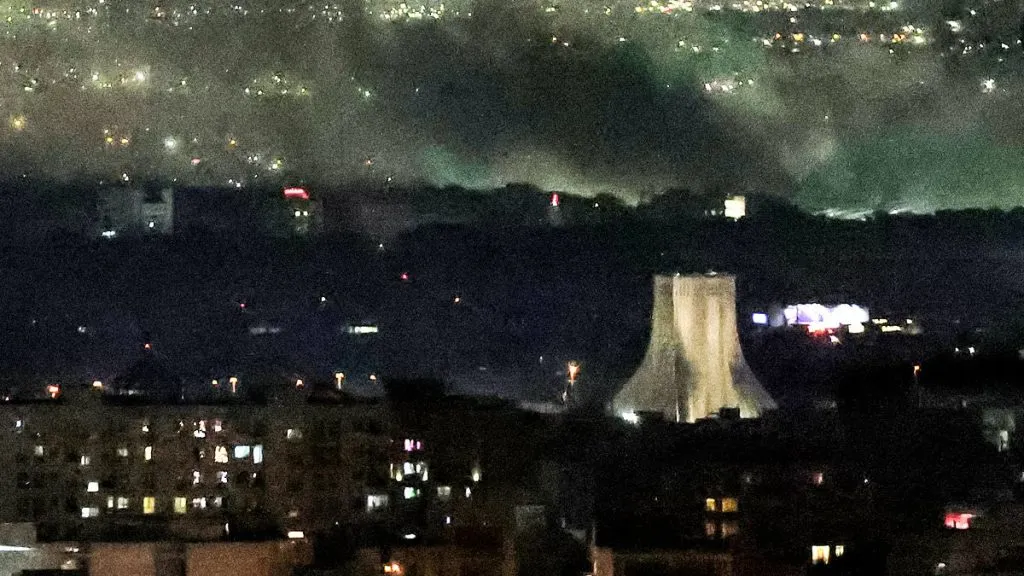
Iran Launches Airstrike on Bahrain Amid Oil Export Standoff
Iran has issued a stark warning, declaring it will prevent ‘not one drop of oil’ from exiting the Middle East if the U.S. and Israeli strikes persist. This declaration followed a deadly attack on Bahrain, which killed one woman and injured eight others in a residential building in Manama, the capital.
“We will hit them so hard that it will not be possible for them or anybody else helping them to ever recover that section of the world,” Trump stated during a news conference.
Escalating Tensions and Market Reactions
Despite heightened tensions, the conflict has already disrupted the Strait of Hormuz, a critical chokepoint for global oil supply. The strait, which handles roughly 20% of the world’s oil, saw tankers halted for over a week, forcing producers to pause pumping as storage facilities reached capacity.
Trump’s promise of ‘fire and fury’ against Iran if the blockade continued was met with mixed market responses. Crude prices fell, but shares rebounded after the president expressed confidence in ending hostilities within weeks.
Iranian Defiance and Strategic Messaging
The Islamic Revolutionary Guards Corps vowed to maintain control over oil exports, asserting that the U.S. and Israel’s actions would not alter their stance. A spokesperson called Trump’s remarks ‘nonsense,’ emphasizing Tehran’s determination to dictate the conflict’s outcome.
“We are the ones who will determine the end of the war,” the Iranian official said, according to state media.
Iran’s appointment of Mojtaba Khamenei as its new supreme leader, seen as a show of defiance, complicated efforts to secure a swift resolution. The leader’s potential influence on Iran’s strategy remains unclear as the war continues.
Global Implications and Diplomatic Moves
Amid the crisis, Trump announced plans to ease sanctions on Russian oil, aiming to alleviate supply shortages. This move could impact efforts to penalize Moscow for its actions in Ukraine, though details remain vague.
“After three rounds of negotiation, the American team said itself that we made big progress. Still, they decided to attack us,” noted Iran’s Foreign Minister Abbas Araqchi in an interview with PBS, signaling a potential shift in diplomatic engagement.
Targeted Strikes and Casualties
Recent strikes included an Israeli attack on a Hezbollah-linked building in Beirut, where a portrait of Sayyed Hassan Nasrallah stood amid the rubble. Simultaneously, an Iranian projectile struck Ma’ameer, Bahrain, on March 9, 2026, highlighting the region’s vulnerability.
As the conflict intensifies, both sides remain locked in a battle of narratives, with Iran’s focus on military retaliation and the U.S. on strategic economic pressure.
