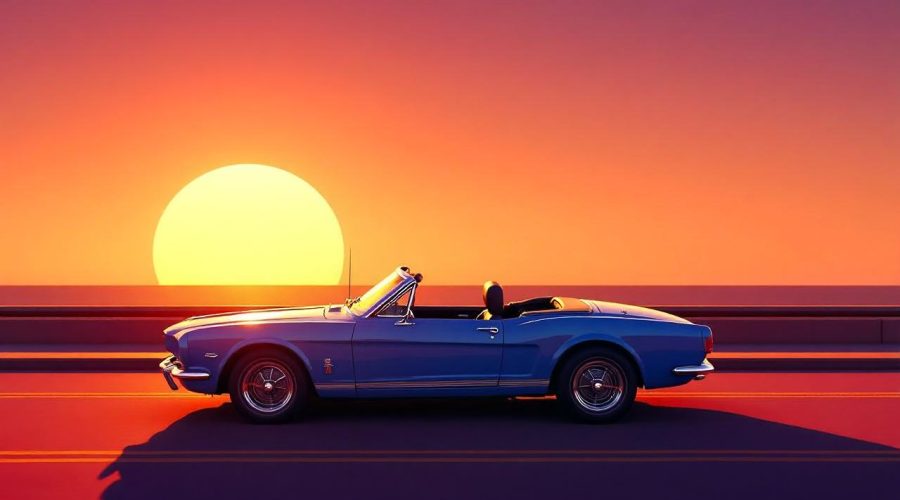
Is the Convertible Heading into the Sunset?
Is the convertible heading into the sunset – In recent years, the allure of the open-top car has waned, leaving many to wonder if this classic symbol of freedom and style is destined for obsolescence. Once a staple of automotive culture, convertibles were synonymous with elegance, adventure, and the unbridled joy of driving with the wind in your hair. But as the market has shifted, their appeal has diminished, and their place in the modern car landscape appears increasingly uncertain. What factors have led to this transformation, and can convertibles reclaim their former glory?
The decline in convertible sales has been steep, with numbers plummeting by nearly 90% over the last two decades. According to the Society of Motor Manufacturers and Traders, new convertible sales in the UK dropped from 109,171 in 2005 to just 11,484 last year. This trend mirrors a broader shift in consumer preferences, as the rise of Sports Utility Vehicles (SUVs) has dominated the industry. SUVs, with their rugged appearance and practical design, now account for 59% of car sales across Europe, as reported by Dataforce GmbH. Their popularity has redefined what people associate with adventure and status, leaving convertibles in the shadows.
Once revered for their aesthetic and symbolic value, convertibles have long been linked to the cinematic glamour of the mid-20th century. In the 1950s and 60s, owning one was a mark of sophistication, often seen in the cars of Hollywood stars. The 1967 film *To Catch a Thief* showcased Grace Kelly and Cary Grant cruising the French Riviera in a sleek Sunbeam Alpine, embodying the era’s ideals of elegance and panache. Later, movies like *The Graduate* and *Thelma and Louise* further cemented convertibles as icons of escapism and rebellion, capturing the spirit of a generation that craved spontaneity and freedom. For decades, they were the dream vehicle for many, and manufacturers eagerly produced them to meet demand.
Yet today, the convertible seems like a relic of the past. Steve Fowler, an automotive journalist and founder of Carblah, highlights how SUVs have supplanted their role. “SUVs offer the same image and appeal as convertibles, but with greater utility,” he explains. “They’re not just big; they’re bold, and that bling factor is hard to ignore.” Models like the Lamborghini Urus, Mercedes-Benz G Wagon, and Bentley Bentayga have become favorites among reality TV stars, athletes, and musicians, blending luxury with functionality. This shift has made convertibles feel impractical for modern lifestyles, where space and versatility are paramount.
Manufacturers, too, have adapted to this change. The cost of producing a convertible is significantly higher than that of an SUV, due to complex engineering and additional safety features. Steve Fowler emphasizes that “it’s not just about cutting the roof off. With evolving regulations and the need for robust structures, building a convertible requires more effort and investment.” This financial burden has led to a scarcity of models, with only a few high-end options available. The Mazda MX-5, Mini Convertible, and Fiat 500 are exceptions, but they cater to niche markets rather than the mainstream. For those seeking affordable soft-tops, the choices are dwindling.
Despite this, convertibles still hold a special place in the hearts of enthusiasts. Peter West, a former biker and owner of a 2014 Mazda MX-5, describes the experience as “the closest thing to a motorcycle you can get in a car.” He highlights the sense of liberation that comes with driving an open-top vehicle, noting how it allows passengers to feel the wind, hear the birds, and experience the road in a way no SUV can replicate. Steve Bassett, a member of the MX-5 Owners Club’s Yorkshire Ridings branch, echoes this sentiment. “People are too fixated on SUVs these days,” he says. “There’s a yearning for something simpler, more elegant—like a classic roadster.”
Historically, convertibles have faced similar challenges. In the 1970s and 80s, their decline was driven by stricter safety regulations and the growing preference for high-performance hatchbacks. The introduction of air conditioning also played a role, as it reduced the need for open-air driving in all weather conditions. However, the industry eventually rebounded in the early 2000s, with sales hitting new peaks. This recovery suggests that convertibles are not doomed to vanish entirely, but their revival may depend on addressing current market dynamics.
Now, the question remains: Can convertibles adapt to the modern automotive landscape? Philip Nothard, insight director at Cox Automotive Europe, believes the answer hinges on reducing manufacturing costs, especially as the industry pivots toward electric vehicles. “Electric convertibles could bridge the gap between style and practicality,” he suggests. “If companies can lower expenses while maintaining the charm of open-top designs, there’s potential for a comeback.” Chinese automakers, with their efficiency and innovation, may play a key role in this transition. Their ability to scale production and experiment with new technologies could make convertibles more accessible and appealing again.
For now, though, the convertible’s position in the market feels precarious. Its appeal lies in its unique blend of openness and performance, but these qualities come at a price. As consumers prioritize practicality and versatility, the dream of a stylish, driver-focused open-top car may seem out of reach. Yet, for those who cherish the experience, the convertible remains a symbol of individuality and joy. Whether it can reclaim its place in the future depends on the industry’s willingness to balance tradition with innovation. For enthusiasts like Peter West and Steve Bassett, the hope is that convertibles will not only survive but thrive once more, proving that the open road is still worth the journey.
The Future of the Convertible
While the market has moved away from convertibles, their essence persists in the minds of those who appreciate them. The MX-5, for instance, has remained a favorite among drivers seeking a lightweight, fun experience. Its enduring popularity suggests that there is still a demand for vehicles that prioritize joy over utility. However, as the automotive industry continues to prioritize electric vehicles and hybrid models, the question remains whether convertibles can find a new niche in this evolving landscape.
Philip Nothard points out that the future of convertibles will depend on their ability to meet the demands of a new era. “Electric cars are reshaping what people expect from vehicles,” he says. “If convertibles can offer the same emotional connection while incorporating sustainable technology, they might yet find a place in the future.” This could mean the return of convertible models with electric powertrains, combining the thrill of open-air driving with modern efficiency. Such innovations could appeal to a generation that values both style and environmental responsibility.
Steve Fowler, though, remains cautious. He argues that the challenge lies in maintaining the convertible’s identity while reducing costs. “SUVs have already taken the lead in terms of practicality and image,” he explains. “To compete, convertibles need to offer something unique—something that SUVs can’t replicate.” For some, that unique quality is the feeling of freedom and connection to the environment that an open-top car provides. Others see it as a symbol of rebellion, breaking away from the standardization of modern vehicles.
As the industry evolves, convertibles may need to redefine themselves. They could shift from being luxury status symbols to more accessible, affordable options. Or they might embrace new technologies to enhance their appeal. Regardless of the path, their survival will require addressing the practical concerns that have made them less attractive to the masses. The Mazda MX-5, Mini Convertible, and Fiat 500 are examples of how this could be done, but their success depends on continued consumer interest.
Ultimately, the convertible’s fate is tied to the balance between tradition and innovation. While SUVs have taken