Myanmar Army Responsible for Over 700 Civilian Deaths in Six Months, UN Reports
Myanmar army killed over 700 civilians – The United Nations has released a report indicating that Myanmar’s military caused the deaths of more than 700 civilians over a six-month period last year. The timeframe, spanning from August to January, was marked by a series of violent incidents, with credible sources confirming at least 702 fatalities. Among these, 224 were women and 153 were children. The report underscores the toll of the military’s actions during the election process, which many view as a political maneuver rather than a genuine democratic exercise.
The military, which staged a coup in 2021, has been accused of perpetrating widespread violence since then. The UN’s Human Rights Office highlights that the election period, initiated by the military, was widely criticized as a farce. Opposition parties were excluded from participating, leaving the process heavily skewed in favor of the military’s interests. The report further notes that the international community’s reduced support has exacerbated the humanitarian crisis affecting millions of people in the country.
Context of the Coup and Ongoing Conflict
Five years ago, the Myanmar military seized control of the government, ousting the democratically elected administration. This event, which led to the imprisonment of leader Aung San Suu Kyi, ignited a protracted civil war. Despite initial gains by rebel groups, the military has since regained momentum through forced conscription and the use of drones. Large regions of the country remain under the control of armed opposition forces, but the military’s continued offensives have intensified the conflict.
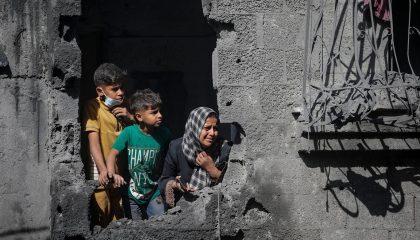
The report reveals that air strikes have been the primary cause of destruction and civilian casualties. Sagaing Region, in particular, was identified as the most perilous area for civilians during this period. The military’s relentless campaign to consolidate power has resulted in 191 deaths there, with a significant proportion involving women and children. These figures reflect the broader pattern of violence and displacement that has characterized the conflict over the past two years.
Targeted Attacks and Humanitarian Impact
One of the most harrowing incidents cited in the report occurred in October when munitions struck civilians gathered outside a school in Chaung-U, Sagaing. The attack killed 23 people, including four children, and injured over 60 others. The victims were participating in a candlelit gathering to mark the end of Buddhist Lent, an event that also served as a platform to advocate for the release of political prisoners and protest military rule.
Another notable attack took place in December, when a military aircraft bombed a tea shop in Tabayin, Sagaing. The bombing occurred as people gathered to watch a football match, resulting in at least 19 deaths and 20 injuries. These attacks, which have been carried out with little regard for civilian safety, illustrate the military’s strategy of indiscriminate force. The report further highlights the abuse of Rohingya communities, including forced recruitment by the Arakan Army, killings, arbitrary arrests, and sexual violence.
“As if the people of Myanmar have not suffered enough at the hands of the military, they have now seemingly been forgotten by those outside the country,” stated Volker Türk, the UN Human Rights Chief. “Funding for localized protection efforts was in many areas the only solace from the suffering caused by constant targeting and indiscriminate attacks by the military. This pullback just compounds that injury.”
The military’s dominance in the election process is evident in the composition of the parliament, which is largely filled with its loyalists. The armed forces are guaranteed a quarter of the seats, while the military’s own party, the USDP, secured nearly 80% of the remaining seats. This reflects a system designed to ensure the military’s continued influence, even as the country remains divided by conflict and political unrest.
Since the coup, the military has launched a sustained offensive across much of the nation, leveraging its control of key areas to suppress dissent. The report emphasizes the need for increased international aid to alleviate the suffering of civilians caught in the crossfire. Despite the growing crisis, the military has managed to maintain its grip on power, with the election serving as a tool to legitimize its authority and further entrench its position in the political landscape.
The ongoing violence has not only claimed lives but also disrupted daily life for millions. The UN’s findings highlight the urgency of addressing the humanitarian situation, as the military’s actions continue to threaten the well-being of the population. With international support waning, the report warns that the burden of suffering will only increase, underscoring the need for renewed global attention and intervention.