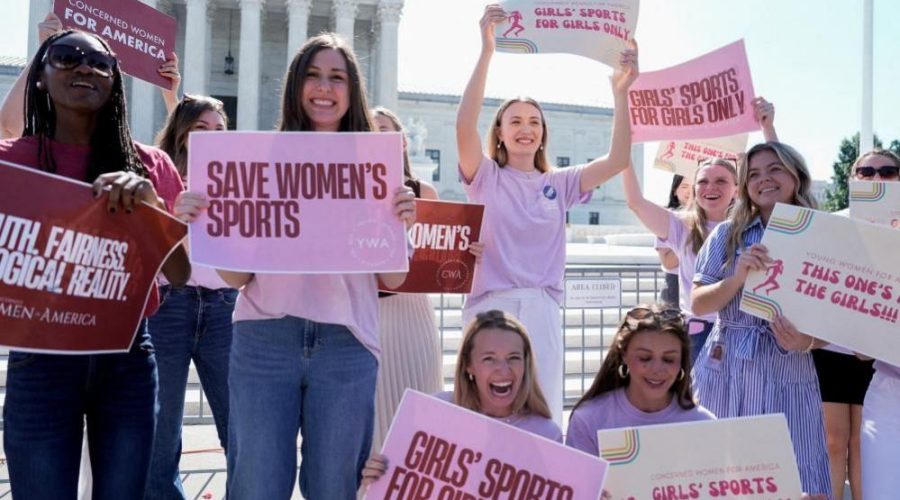
US Supreme Court Affirms State Laws Restricting Transgender Women in Female Sports
US Supreme Court upholds bans on transgender – The U.S. Supreme Court has determined that states may implement restrictions on transgender women participating in female school and collegiate sports. In a landmark decision, the justices upheld laws from Idaho and West Virginia that require participation in athletic competitions based on the sex assigned at birth. The ruling marks a significant moment in the ongoing debate over gender identity and sports equity, with the court’s nine members reaching a consensus on the legality of such bans.
Legal Challenges and State Legislation
Two separate cases, originating from Idaho and West Virginia, formed the basis of the Supreme Court’s deliberation. These states passed legislation in recent years that mandates school and college sports teams to compete according to the gender listed on participants’ birth certificates. The laws sparked challenges from transgender athletes, who argued that they face discrimination in competitive settings. One plaintiff claimed the restrictions violated equal rights protections in the U.S. Constitution, while another asserted the bans conflicted with civil rights laws.
Since Idaho introduced its law in 2020, over two dozen states have enacted similar measures. These policies aim to ensure that biological males are not allowed to compete in female sports, based on the belief that they possess a natural physical advantage. The decision has drawn strong reactions from political figures and advocacy groups, with President Donald Trump celebrating it as a “BIG WIN” on social media. His support for the ruling has been a central theme in his 2024 election campaign, emphasizing its role in safeguarding women’s sports.
Split Rulings and Constitutional Arguments
The court’s justices were divided in their interpretation of the Constitution’s 14th Amendment, which guarantees equal protection under the law. The six conservative justices concluded that the bans did not infringe on constitutional rights, while the three liberal justices argued they did. Justice Brett Kavanaugh, the author of the majority opinion, stated that the Constitution and Title IX—federal legislation prohibiting sex-based discrimination—do not necessitate a fundamental restructuring of women’s and girls’ sports programs.
Justice Sonia Sotomayor, in her dissent, criticized the majority for applying a narrow standard to equal protection. She contended that the decision overlooked the broader implications for transgender athletes, asserting that it represented a “diminished view of equal protection.” Her argument highlighted the tension between preserving traditional sports structures and accommodating individuals who identify as women but were assigned male sex at birth.
Plaintiffs and Judicial Responses
The Idaho case involved Lindsay Hecox, a transgender woman and long-distance runner, who challenged the law shortly after its enactment. Her legal team secured an injunction from both a district court and an appeals court, which initially found the state’s policy unconstitutional. However, the Supreme Court’s final ruling reversed this, affirming the law’s validity. Hecox’s case underscored concerns about fairness in competition, as she argued that the ban disproportionately affected her ability to participate.
In West Virginia, the challenge centered on Becky Pepper-Jackson, a 16-year-old athlete who contested the state’s law under equal-protection grounds. The ruling was hailed by the state’s attorney general as a triumph for common sense, stating it would empower all states to “ensure fairness and safety for female athletes today and for generations to come.” This sentiment reflects the broader rationale behind the bans, which emphasize protecting traditional female athletic opportunities.
Advocacy and Opposition
Supporters of the bans, including lawmakers and conservative advocacy groups, argue that transgender women have a biological edge over athletes assigned female at birth. They cite scientific evidence suggesting that males possess inherent advantages in strength, power, and endurance, which could impact competitive outcomes. This view was echoed by the International Olympic Committee (IOC), which recently announced a policy limiting the women’s category of Olympic sports to biological females. The IOC’s working group concluded there was a “clear consensus” that male physiology provides a performance advantage in most athletic events.
Conversely, opponents of the bans, including the Human Rights Campaign (HRC), contend that the laws unfairly exclude transgender athletes from competition. HRC president Kelley Robinson described the decision as “heartbreaking,” emphasizing that transgender student athletes are being “forced to sit on the sidelines simply for who they are.” The group argues that the bans fail to account for the diverse experiences of individuals and could marginalize those who identify as women but were born male.
Political and Institutional Impact
The issue of transgender athletes in women’s sports has become a focal point of political discourse, with President Trump making it a key element of his 2024 campaign. His administration had previously taken steps to support the bans, including signing an executive order to limit transgender women’s participation in female sports teams. This directive has influenced the NCAA, the governing body for college athletics, which adopted a policy aligning with the state laws.
Following the Supreme Court’s decision, First Lady Melania Trump expressed her approval on social media, asserting that the ruling “supports the rights of the LGBTQIA+ community and also protects opportunities for female athletes.” Her statement underscored the dual goals of the policy: promoting inclusivity for LGBTQ individuals while maintaining the integrity of women’s sports. This balanced perspective contrasts with the more polarized debates surrounding the issue.
While the decision provides clarity for states implementing such policies, it has also intensified the debate over the role of gender identity in sports. The ruling highlights the ideological divide within the court, with conservative justices prioritizing state authority over constitutional guarantees. Meanwhile, the liberal justices argue that the bans require further scrutiny to ensure they do not undermine the principles of equality.
Broader Implications and Future Outlook
As the decision takes effect, its impact will likely extend beyond courtrooms and into athletic programs nationwide. Schools and colleges will now have the legal backing to enforce policies that restrict transgender women from competing in female sports. Advocates for transgender rights remain critical of the ruling, calling it a setback for inclusive policies. However, supporters see it as a necessary measure to protect traditional sports categories and ensure fairness for all participants.
The ongoing debate reflects a larger conversation about identity, biology, and the evolving landscape of sports. As new evidence emerges and societal views shift, the legal and policy frameworks surrounding transgender athletes will continue to be tested. The Supreme Court’s affirmation of state bans has set a precedent, but the question of whether these policies will be revised in the future remains open.