
Are the US and Iran on a collision course for war or a surprise deal?
Are the US and Iran on a collision course for war or a surprise deal?
The US has intensified its military presence near Iran, signaling the largest regional deployment since the 2003 invasion of Iraq. With the USS Gerald R Ford, the world’s largest supercarrier, currently operating in the Mediterranean, preparations for a possible campaign are underway. A key element of this buildup is the introduction of six E-3 Sentry airborne warning and control aircraft, representing almost 40% of the US fleet.
These aircraft serve as critical “eyes in the sky,” enabling over-the-horizon radar to manage air defenses against potential Iranian retaliation. The scale of this operation suggests Washington is primed for a strategic move, anticipating Tehran’s response. However, the motivations behind this action remain complex, shaped by both political and economic considerations.
Trump’s Dilemma: De-escalation or Deterrence?
Trump’s foreign policy has consistently prioritized assertiveness, a principle reinforced during his May 2025 speech in Riyadh. An all-out war with Iran could jeopardize his domestic initiatives, particularly given the economic impact. Analysts warn that such a conflict might drive oil prices up to $90 or even $200 per barrel. Meanwhile, Trump’s emphasis on pressuring Israeli Prime Minister Benjamin Netanyahu to end hostilities in Gaza hints at a desire to reduce regional tensions.
Yet, the president’s inclination towards decisive action persists. Neutralizing the Iranian regime could be seen as a bold strategy to reshape the Middle East, dismantling the “axis of resistance” and establishing a new alignment centered on Washington, Tel Aviv, and Riyadh. Domestic challenges may also play a role, as the Supreme Court recently ruled 6-3 that Trump’s use of emergency powers to implement global tariffs was unconstitutional—a blow to his economic vision.
A Nation on Edge: Iran’s Internal Struggles
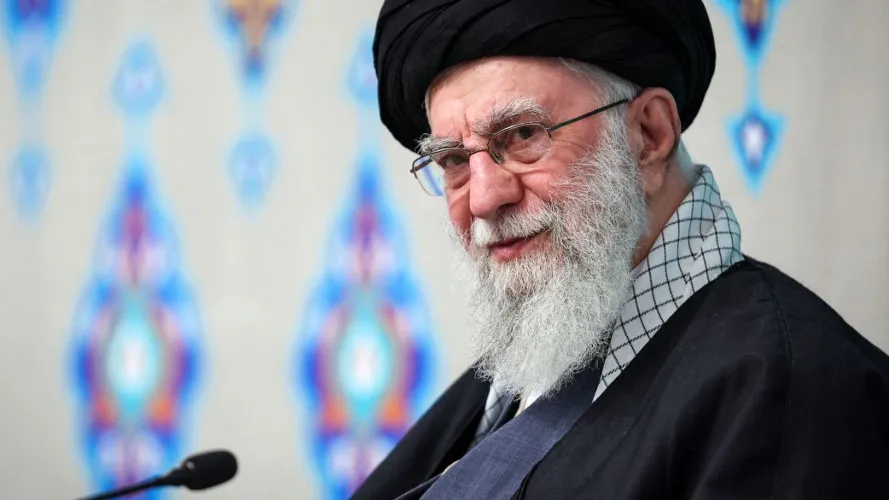
Iranian Supreme Leader Ayatollah Ali Khamenei and his inner circle are deeply concerned about escalating conflict. Internally, the government faces growing unrest following the suppression of January’s widespread protests. Human rights groups report that tens of thousands of demonstrators have been arrested, with tensions worsening after US and Israeli officials exploited the situation. Israeli leaders actively encouraged uprisings against the Iranian state, undermining the legitimacy of the resulting chaos.
The economic crisis, exacerbated by US sanctions and domestic mismanagement, has reached a critical point. A credible Iranian publication noted last week that food inflation has soared to triple-digit levels. The free-market exchange rate, a visible indicator of this turmoil, has plummeted since January, fueling public discontent. For Khamenei, war might now serve as the final push to accelerate internal collapse.
The Balance of Power: Rhetoric and Reality
Trump’s recent declaration that Tehran had only 10 to 15 days to reach a “meaningful deal” has placed the administration in a tight spot. If talks stall, retreating could undermine his image as a strong leader. This pressure coincides with his January social media posts urging Iranians to “take over your institutions,” a hollow promise that left many feeling abandoned.
“Otherwise, bad things happen,” he added.
Meanwhile, Trump’s special envoy, Steve Witkoff, revealed in a Fox News interview that the president remains “curious” about Iran’s stance. “I don’t want to use the word ‘frustrated’ … because he [Trump] understands he’s got plenty of alternatives, but he’s curious as to why they haven’t,” Witkoff said. “I don’t want to use the word ‘capitulated’, but why they haven’t capitulated.”
With the stakes high and the pressures mounting, both leaders face a precarious choice: to escalate or to negotiate. The outcome may hinge on the credibility of each side’s resolve, as the region teeters between confrontation and compromise.
