
Palestine is now the conscience of the world. No deal will change that
Palestine is now the conscience of the world. No deal will change that
US President Donald Trump’s recent unveiling in Washington was not a peace plan, but a mockery of a genuine one. The so-called breakthrough, negotiated between an American facilitator and an Israeli aggressor, erased Palestinians from the equation entirely, leaving them sidelined as the terms of a treaty were dictated by those who claim to represent them.
Trump and Netanyahu stood side by side, celebrating a pact that gave no voice to the Palestinians. With no Hamas representatives, no Palestinian Authority delegates, and only a minimal presence to feign legitimacy, the agreement was more performance than progress. It was a reenactment of the same colonial mindset that underpinned the Abraham Accords: striking compromises over Palestine without consulting its people.
“Who could believe it?” Netanyahu exclaimed, marveling at the complacency of Muslim regimes that enabled Israel’s dictates. He had long relied on eliminating Palestinian negotiators—ranging from Hamas leader Ismail Haniyeh to those targeted in Doha—to pave the way for his victories.
History will judge this moment harshly. A ceasefire proposal that excludes the occupied is not peace; it is a colonial decree. It revives the language of mandates and tutelage, echoing the 1917 Balfour Declaration, which promised Palestinian land without their consent or presence.
Arab and Muslim leaders, summoned to lend credibility, became instruments of submission. Their role was not to support Palestine, but to press it into silence. This strategy echoes the colonial framework that has long sought to control Palestine through external authority, masking it with humanitarian rhetoric.
Trump’s deal is an attempt to transform defeat into triumph. Where military campaigns faltered, diplomacy now offers a veneer of success. Yet, the plan lacks substance: it hinges on the return of hostages, with no binding guarantees of withdrawal or future concessions. Israeli troops remain entrenched, and the Palestinian narrative is quietly dismantled.
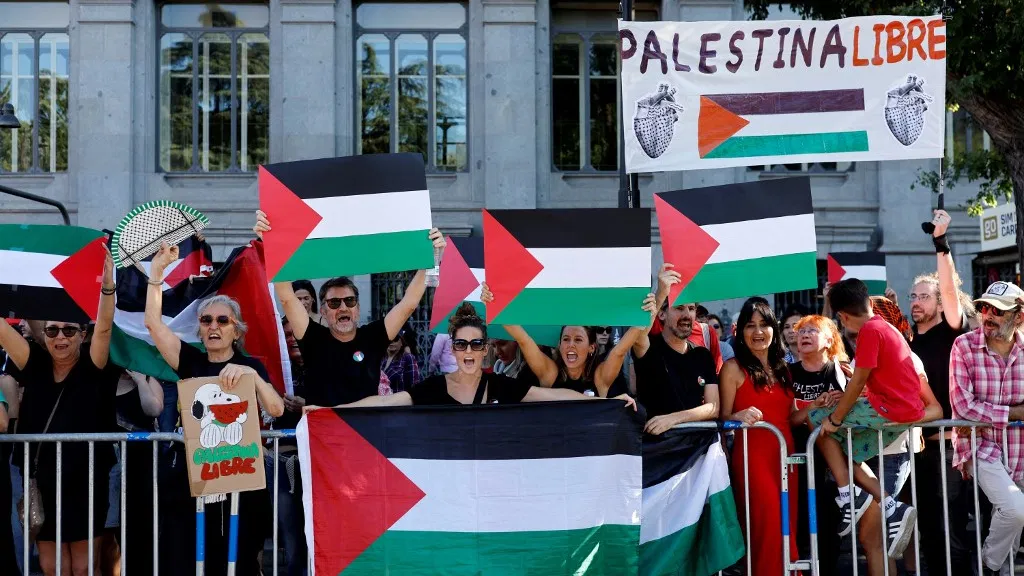
Despite the spectacle, Israel’s isolation deepens. At the United Nations, Netanyahu faced 77 nations walking out, leaving him to address empty seats. Public opinion in Europe and the US shifts decisively against Israel, driven by younger generations who see the conflict as a symbol of injustice. Global support for Palestine grows, and this agreement threatens to halt that momentum.
As Egypt’s former UN delegate Motaz Khalil remarked, this is “a surrender plan.” It silences Palestinians, strips them of agency, and grants Netanyahu the victory he once sought through force. The Gaza Humiliation Foundation, a system of external control, is now enshrined in policy—another chapter in the story of Palestinian dispossession.
