
Sudan war: Why Hemedti’s legitimacy push in Uganda falters amid RSF atrocities
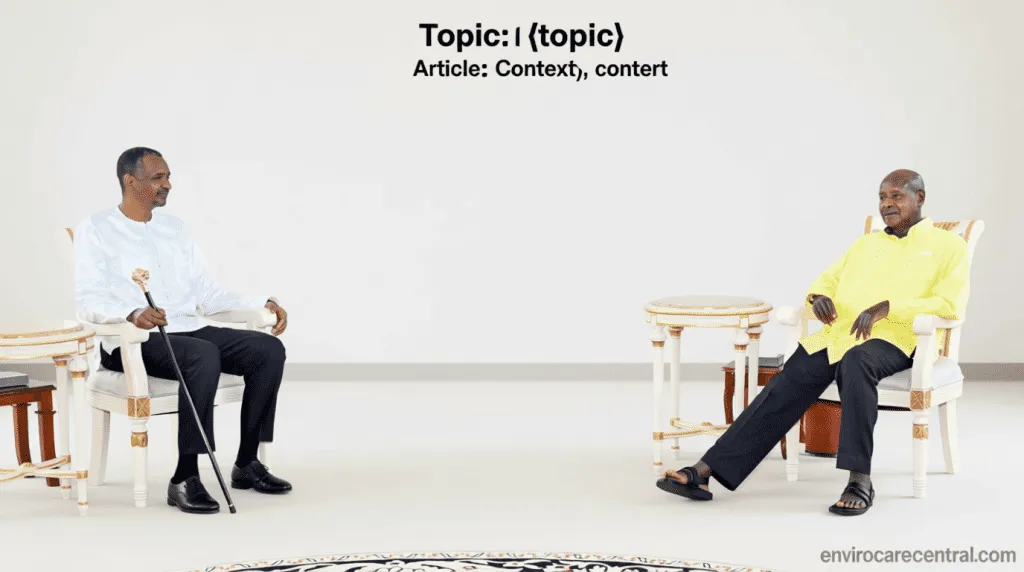
On 20 February, Mohamed Hamdan Dagalo, theSudaneseRapid Support Forces (RSF) commander widely known as Hemedti, arrived in Kampala, Uganda, where he met with Ugandan PresidentYoweri Museveni.
It was Hemedti's most visible diplomatic engagement outside Sudan in months.
The visit took place just aday afteraUN probefound the RSF had committed acts of genocide in Darfur, and theUSimposedsanctionson three RSF commanders for atrocities in el-Fasher.
It came after sustained internationalcondemnationof atrocities attributed to the RSF, including a December 2023 ruling by the US that RSF actions in Darfur amounted to ethnic cleansing, as well as briefings andresolutionsat the UN Security Council throughout 2024.
Hemedti did not travel alone. He was accompanied by figures associated with the parallel political structure he helped usher into existence in Nairobi – often referred to as "Tasis", an initiative that attempted to frame RSF territorial control as a civilian-backed administrative alternative.
It failed to secure broad Sudanese political endorsement and was largelyrejectedby governments, regional bodies and international organisations, including the UN.
Sudan's government condemned Uganda for receiving Hemedti, depicting the move as aninsultto the Sudanese people and humanity at large. Kampala must therefore be read as a second arena – not merely a diplomatic courtesy call, but a recalibrated search for recognition.
The RSF today exercises administrative control in areas under its influence and supports the emergence of parallel governance structures. That evolution raises a central concern as to whether Sudan is drifting towards de facto fragmentation.
The timing of the visit points to a deliberate external pivot in strategy. Hemedti is no longer confined to combat zones or to addressing domestic audiences; he is seeking a regional platform to shape narratives, cultivate allies and expand influence beyond national borders.
Hemedti is seeking a regional platform to shape narratives, cultivate allies and expand influence beyond national borders
In Kampala, he emphasised national unity, opposition to partition and commitment to dialogue,framing the waras a struggle against entrenched Islamist networks and presenting himself as open to a civilian-led political process.
His speech included claims of military strength, asserting that RSF fighters now number more than500,000and are fully ready for a broad role in Sudan's future.
This claim appears calibrated to signal strength to internal constituencies, reassure supporters, and influence negotiations by making clear that the RSF sees itself as a long-term actor.
These elements suggest that the speech served both domestic posturing and regional reputation-building.
Yet there is a glaring contradiction in a commander of a powerful paramilitary force, accused internationally of mass abuses, advocating democracy while presiding over a parallel political apparatus outside recognised state institutions.
What is being tested here goes beyond Hemedti himself. The RSF is trying to transition from paramilitary power to political legitimacy without surrendering military autonomy.
Analysts at the International Crisis Group have repeatedlywarnedthat Sudan's war is no longer just a contest for Khartoum but a struggle over competing claims to sovereignty, while other experts have likewise cautioned that prolonged dual-authority dynamics in African conflicts often harden into lasting fragmentation.
Within that context, the Kampala visit served two purposes: image rehabilitation under international scrutiny and diplomatic normalisation of the RSF as a legitimate political actor on par with the state.
Uganda was not a random choice. Museveni has long positioned himself as an advocate of "African solutions to African problems", and the country occupies a relatively neutral space within the Horn and East African diplomatic landscape.
Hosting Hemedti elevates Kampala's profile as a potential interlocutor without binding it to one Sudanese camp.
Uganda also serves as a respected regional leader that could confer symbolic legitimacy and a venue outside the shadow of Nairobi, where the Tasis initiative struggled to gain traction.
The visit connects indirectly to broader mediation frameworks involving the African Union and the Intergovernmental Authority on Development (Igad).
But by engaging Hemedti publicly, Museveni steps into a delicate balancing act. The Rift Valley Institute hasarguedthat regional leaders engaging armed actors must weigh short-term mediation access against long-term reputational costs.
Uganda must therefore maintain diplomatic flexibility while avoiding the perception of legitimising a force accused of grave abuses.
The timing of the visit also matters, as it followed months of heightened scrutiny at the UN and increased western pressure. In that light, Hemedti's speech in Kampala was conciliatory and couched in the language of democracy and nationalism.
He attempted to position himself not as a secessionist strongman but as a reformist commander resisting ideological capture of the state. But whether that narrative holds up will depend more on what the RSF does than on its leader's rhetoric.
Igad-led processes have repeatedly stalled. Talks in Jeddah and elsewhere have produced few durable outcomes.
By opening new channels in Kampala, the RSF expands its diplomatic space and reduces reliance on mediation formats that have not favoured it.
The Kampala visit is more about shaping who gets recognised as a future stakeholder.
If the RSF's parallel political structures consolidate while peace negotiations stall, Sudan risks sliding into entrenched divided governance.
This kind of functional fragmentation of authority, as the African Centre for Strategic Studies haswarned, often outlasts ceasefires and complicates reconstruction.
Hemedti's insistence in Kampala that Sudan will not be divided must be measured against the institutional architecture emerging under RSF influence.
The visit was a strategic attempt to compensate for the failure of the Nairobi initiative, respond to mounting international condemnation and position the RSF as indispensable in any future settlement.
Yet the RSF, a force under global scrutiny, still presents itself as democratic. Its commander speaks of unity while nurturing parallel governance. And Uganda, in hosting him, must now balance its role as mediator against the reputational cost of legitimising the RSF.
The decisive question for Sudan is no longer whether the RSF can win militarily, but whether the country's fragmented political landscape can absorb competing claims to sovereignty without crystallising into enduring division.
The views expressed in this article belong to the author and do not necessarily reflect the editorial policy of Middle East Eye.
