Farewell Cape Verde – the underdogs the World Cup will never forget
Farewell Cape Verde – When the final whistle echoed across the stadium in Miami on Friday night, it marked the end of a historic campaign for Cape Verde. The team, representing one of the smallest nations in World Cup history, fell short in a thrilling 3-2 defeat to Argentina in the last 32. Yet, their journey through the tournament has left an indelible mark, showcasing the spirit of a team that defied expectations and captured the imagination of football fans worldwide.
A Journey Against the Odds
Cape Verde entered the 2026 World Cup ranked 67th in the world, a position that many believed would be a stepping stone to early elimination. However, their resilience and determination proved otherwise. In their opening group match, they held European champions Spain to a 0-0 draw, securing their first point in the competition. This was just the beginning of a narrative that would see them challenge giants of the game, including Uruguay and Argentina.
Against Uruguay, Cape Verde struck a historic first World Cup goal, sending shockwaves through the football world. The underdogs then faced Argentina, a team that had already won the tournament, and they nearly pulled off the upset of the year. The match was a rollercoaster, with Messi scoring early, but Cape Verde responded with a stunning 1-1 equalizer in extra time. A second equalizer by Sidny Lopes Cabral brought the game to its climax, only for a cruel deflection off Diney Borges to hand Argentina the victory.
Heartbreak and Heroism
“Cape Verde have lost, but they’ve won,” said former Scotland international James McFadden on BBC Radio 5 Live. “They have shown courage, togetherness, unity and unwavering belief in what they are and what they can do. The story of this tournament is Cape Verde. That is what you want to see in a football side.”
McFadden’s words echo the sentiment of many who followed the Blue Sharks’ campaign. Their ability to compete with the world’s best teams was a testament to their collective effort. Former England right-back Gary Neville, speaking on ITV, praised their performance as “one of the greatest” he had ever seen from an underdog. “They are crying because they are going home,” Neville added. “They don’t want to go home. They want to be here for the rest of their lives. They want to be here forever. This is a moment that’s probably not going to come back for some of these players. It’s magical but also upsetting.”
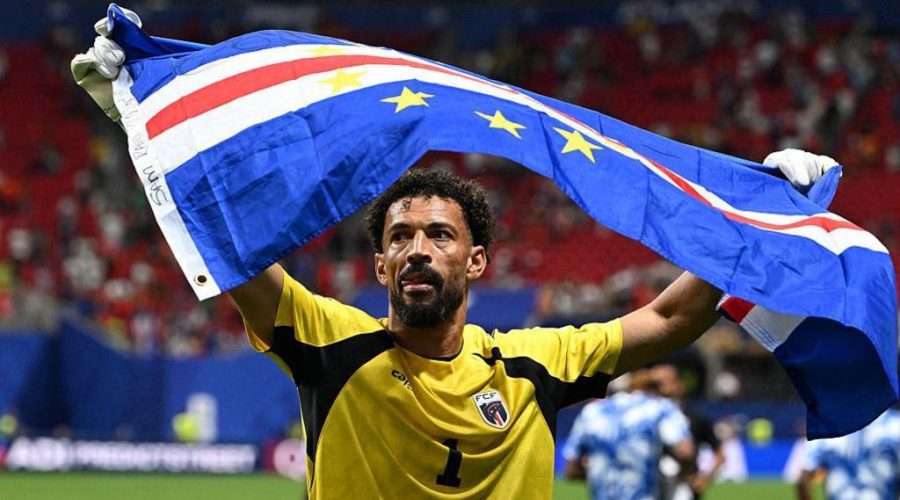
The emotional highs and lows of their journey were palpable. From the moment goalkeeper Vozinha collapsed to the turf after denying Spain, to his later celebration of holding the Cape Verde flag high, the 40-year-old keeper became a symbol of their tenacity. His performance elevated him to superstar status, despite playing for a Portuguese second-division club. Even without a team, his impact on the World Cup stage was undeniable.
A Nation on the Map
Cape Verde’s manager, Bubista, expressed pride in his team’s achievements, emphasizing their ability to challenge the world’s top teams. “We showed that we may be a small country, but we can play against the best in the world,” he said. “That’s a reason for pride. We made history for our country. They can be proud for representing our nation. To be able to play the way we did against the world champions, and to draw level twice, is something incredible.”
Their performance also sparked a global conversation about the potential of smaller nations in international football. Roberto ‘Pico’ Lopes, a stalwart defender who played in all four matches, shared the pride of his teammates. “One of the best things to come from this World Cup is nobody asks where Cape Verde is on the map anymore,” he told BBC Sport. “This is history in itself for us. We’ve put ourselves on the map. We’re a small nation, but with big hearts, and we showed what is possible—when you believe, you can achieve.”
The Power of Opportunity
The expansion of the World Cup to 48 teams was a topic of discussion before the tournament began, and Cape Verde’s run has reinforced its value. Gary Neville, reflecting on the change, admitted he would “never be a sceptic again.” He highlighted the importance of giving teams like Cape Verde a chance to shine. “What this does show people is that when you give people the opportunity, they can step onto the biggest stage no matter how small they are,” Neville said. “They can have it with the world champions, with one of the greatest players in the world. It was a Herculean effort from them, absolutely.”
Former England striker Ian Wright echoed Neville’s sentiment, urging FIFA to ensure equitable support for underrepresented nations. “That’s what you’re ideally hoping will happen around the world,” Wright said on ITV. “This is why FIFA have to do so much to make sure the funds they get do reach everybody. It’s not just about the result; it’s about the journey they’ve made and the inspiration they’ve given to others.”
Legacy of a Brave Team
Cape Verde’s campaign will be remembered for its courage and unpredictability. They proved that size doesn’t determine success in football, and their near-upset against Argentina demonstrated the gap between potential and performance. Fans worldwide may have watched their matches with disbelief, but the team’s heart and hustle will linger long after the final whistle.
While they fell short of advancing further, their impact on the tournament is undeniable. The Blue Sharks have become a beacon of hope for nations that often get overlooked. Their story is one of perseverance, unity, and the power of belief. As Neville noted, their performance was a “magical” moment that encapsulated the essence of underdog triumph. For Cape Verde, this was more than a World Cup run—it was a statement of identity and a celebration of their footballing spirit.
Their journey also highlighted the importance of expanding the tournament to include more teams. With 48 nations competing, the stage is now larger for stories like Cape Verde’s. This shift allows smaller countries to showcase their talent and challenge the status quo. Neville’s admiration for their effort underscores the transformative potential of such changes. “It’s not just about the result,” he said. “It’s about the narrative they’ve created and the legacy they’ll leave behind.”
As Cape Verde prepares to depart the United States, they carry with them the memories of a tournament that will be etched in football history. Their matches against Spain, Uruguay, and Argentina will be replayed for years to come, not just for the goals or the dramatic comebacks, but for the way they played with heart and determination. In a sport often dominated by larger nations, Cape Verde’s story is a reminder that the underdogs can write their own chapter of greatness.