World Cup Refereeing Shift: Has the Corner Chaos Finally Been Tamed?
Has World Cup signalled end of chaos – A significant shift in how corner kicks are managed has become evident at the current World Cup, driven largely by directives from FIFA’s officiating leadership. The changes are particularly noticeable following a controversial moment in the Germany versus Paraguay encounter, where a goal was ruled out due to a blocking tactic that has become increasingly common in domestic leagues.
During the match, Jonathan Tah believed he had secured a 2-1 victory for his nation in extra time. However, the video assistant referee intervened to disallow the strike, determining that Waldemar Anton had deliberately positioned himself to block Paraguay’s goalkeeper, Orlando Gill. This specific maneuver is highly reminiscent of the strategy Arsenal employed during their recent Premier League triumph, a period where they set a record by scoring 19 goals from corner situations.
“They’ve scored 60% of their goals that way,” former Liverpool manager Jurgen Klopp remarked after the Germany match, noting that while the statistic might be slightly inflated for dramatic effect, the trend is undeniable.
From Fight Scene to Controlled Play
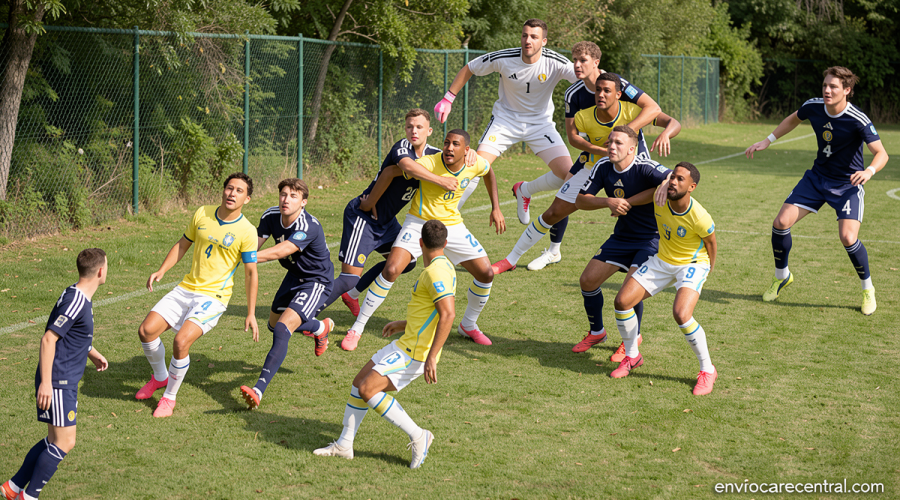
While the Arsenal tactic has proven effective, it often resulted in chaos within the penalty area. Towards the conclusion of the last domestic season, wrestling and physical obstruction became endemic. Players were frequently thrown to the turf, and at times, up to sixteen individuals would crowd into the six-yard box, severely limiting the goalkeeper’s movement. Reports from BBC Sport indicate that senior officials viewed these corner kicks as resembling a “fight scene” rather than a display of pure football skill.
In contrast, the World Cup has showcased a markedly different atmosphere. FIFA has implemented a stricter approach to combat this skullduggery. Pierluigi Collina, the head of referees for FIFA, issued clear instructions prior to the tournament. His message to coaches was straightforward: excessive holding would no longer be tolerated. Meanwhile, his directive to match officials was to remain vigilant and strict regarding off-the-ball movements designed to hinder opponents.
Collina emphasized that while some physical contact is inevitable in a contact sport, the extent of it must be reduced. He also introduced the concept of an exclusion zone for goalkeepers within the six-yard box. The disallowance of Germany’s goal against Paraguay serves as a prime example of this philosophy in action. Anton held his ground in a manner that ensured the goalkeeper would inevitably collide with him, a deliberate blocking move that Collina had drilled into his officials.
Consistency and Statistical Impact
The application of these rules has been consistent across different matches. Spain experienced a similar outcome when a goal was disallowed due to a foul committed by Pau Cubarsi on Austria’s goalkeeper, Alexander Schlager. Thomas Hitzlsperger, a former Germany midfielder, highlighted this consistency on BBC One, noting that unlike in the Premier League where goalkeepers often protest, the World Cup officials are firmly backing the keepers.
“At least they are consistent, but it’s the extreme opposite,” Hitzlsperger observed. “We watch the Premier League every week and this is so different. None of the goalkeepers are protesting. Fifa changed their approach and any contact is in favour of the keeper.”
The statistical data supports the notion that this new approach is altering the value of corners. In the previous Premier League season, teams averaged 0.49 goals per match from corners, equating to roughly one goal every other game. The Bundesliga and Champions League followed closely with an average of 0.46. However, the World Cup figure stands at 0.34, aligning with other top-five European leagues that maintain a lower threshold for intervention inside the penalty area. Interestingly, this is still higher than the 0.20 average recorded during the 2022 World Cup in Qatar.
The Miami Training Camp
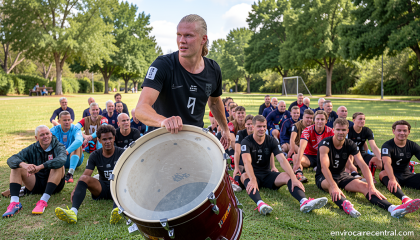
A major factor in this consistency is the rigorous preparation undertaken by FIFA. The 51 referees and 88 assistant referees assigned to the tournament are stationed at a state-of-the-art facility in Miami, Florida. To ensure they understand the nuances of each team, FIFA has recruited a large group of semi-professional players. These athletes are drilled in the specific playing patterns and set-piece routines of the national teams participating in the tournament.
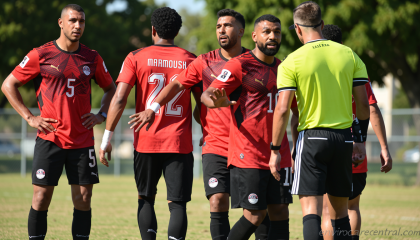
For instance, ahead of the quarter-final clash between France and Morocco, referee Facundo Tello and his crew traveled to the training center. There, they engaged in exercises involving two full XIs performing drills that mimicked the tactical approach of the quarter-finalists. This hands-on method allows officials to observe where teams position their players, how they make runs, and crucially, who is in a blocking position.
Collina believes that utilizing real scenarios is far more effective than relying solely on dossiers and diagrams. By providing immediate feedback on decisions and integrating that learning into the games, FIFA aims to create a controlled environment where the chaos of the past is minimized. While this intensive training is easier to manage in a tournament format, it sets a potential precedent for how corners might be officiated in the Premier League next season.