Rainbow Flags Await Egypt and Iran at Awkward Pride Match
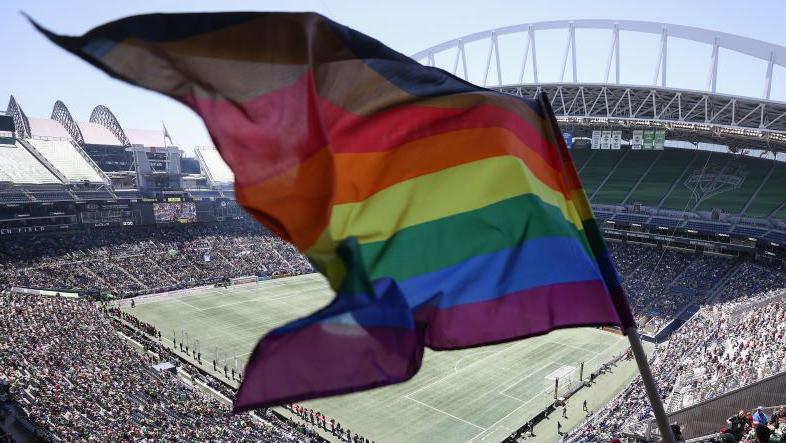
Rainbow flags await Egypt and Iran – As the World Cup 2026 approaches, the Seattle Stadium will soon host a symbolic encounter between Egypt and Iran, drawing attention not only to the football match itself but also to the broader cultural and social dynamics at play. The game, scheduled for Saturday at 04:00 BST, has been labeled a Pride Match by local organizers due to its timing—falling on the Friday preceding Pride Weekend, a global celebration of LGBTQ+ diversity. While the event has sparked mixed reactions, the vibrant display of rainbow flags inside the stadium aims to highlight inclusivity and celebrate the community’s presence in the city.
The Coach’s Defiant Stance
Iran’s head coach, Amir Ghalenoei, has expressed his intention to keep the focus solely on football, stating he will not address “things that do not exist” during the match. In a recent press conference, he emphasized that the game should be about the sport and its inherent beauty, rather than other topics. “We are here to play football, not for other things,” Ghalenoei said, adding that discussions about issues deemed forbidden by his religion are unnecessary at this time. His comments reflect the broader concerns of both Egypt and Iran, where homosexuality remains illegal, and the match has been perceived as a potential point of contention.
“We are here to play football, not for other things,” Ghalenoei said. “As for things that are forbidden in our religion and do not exist, we do not want to talk about them. We only talk about the match, football and the beauty of the game.”
Seattle’s Pride Ambitions
Across the street, Seattle’s host committee has defended the decision to frame the game as a Pride Match, asserting that the timing was not intended to provoke. According to Hedda McLendon, a representative from the World Cup organizing committee, the event had been planned long before the draw paired Egypt and Iran. “The Fifa World Cup 2026 is an inclusive event that welcomes people from all backgrounds,” she explained, highlighting that the stadium code of conduct allows for general statements of human rights, including rainbow flags, to be displayed as a mark of support for sexual orientation and gender identity.
“We’re thrilled,” Hedda McLendon told the BBC after the city’s Pride Match Day press briefing. “It might not be how you want to live or how things are in your country, but this is something that makes us unique and we want you to experience it and be curious.”
McLendon and other officials emphasized that the match was not a direct challenge to the traditions of Egypt or Iran but rather an opportunity to showcase Seattle’s commitment to diversity. “The match is about Seattle, not Egypt or Iran,” said Jess Fishlock, a Welsh football legend who now plays for Seattle Reign FC and is part of the host committee. “Regardless of who is playing, we would be the same. It’s such an important part of Seattle’s identity and culture.” Fishlock’s perspective underscores the city’s pride in its role as a hub for LGBTQ+ visibility, even as the teams prepare to compete on the field.
Cultural Tensions in the Fan Zone
While the stadium becomes a canvas for rainbow symbolism, the fan zone in Seattle tells a different story. Here, Egyptian fans gathered to cheer on Mexico days before their team’s match against Iran, expressing that the Pride label felt secondary to their immediate excitement. “Right now it’s about two teams trying to get to the next round,” said Makarius Demian, an Egyptian supporter. “Pride Match or no Pride Match, that’s not what matters.” His sentiment reflects a broader divide between the city’s progressive spirit and the cultural values of the competing nations.
Not far from the big screen, an Egyptian restaurant pop-up is preparing for the match, offering a taste of home to fans who may feel a connection to their heritage. Owners Amani Abouammo and Ayman Almasri have temporarily closed their Koshari eatery—a beloved staple of Egyptian cuisine, blending lentils, chickpeas, pasta, fried onions, and garlic tomato sauce—to serve vegan street food at the fan zone. They admitted that the pairing of Egypt and Iran in a Pride fixture has created an awkward situation, rooted in a cultural misunderstanding. “Here it is the culture. People are used to that,” Abouammo remarked. “Back home, people are not used to it. It’s this piece of confusion that each party cannot understand the other party.”
FIFA’s Inclusive Framework
Football’s governing body, FIFA, has acknowledged the presence of rainbow flags at the stadium but clarified that this is not an official Pride Match. In a statement, FIFA emphasized that the World Cup 2026 is an inclusive event designed to welcome fans from all walks of life. “Fans of all sexual orientations and gender identities are welcome at matches and events,” the organization noted. “General statements of human rights, including rainbow flags and other flags representing sexual orientation and gender identity, are permitted under the stadium code of conduct, provided they are used consistently with the event’s values.”
This framework allows for the celebration of diversity without forcing teams or players to engage with the issue directly. While Egypt and Iran have raised concerns about the symbolic implications of the match, the event is expected to proceed as planned, with Seattle’s residents and visitors embracing the opportunity to showcase their support for inclusivity. The contrast between the stadium’s vibrant atmosphere and the cultural tensions outside highlights the complex interplay between sport and social identity.
A Clash of Perspectives
The match serves as a microcosm of the broader cultural dynamics between the two nations. For Egypt, the team is entering with momentum, having defeated New Zealand in their previous game and holding a strong position in Group G. Iran, on the other hand, arrives with a different mindset, as their tournament has already been shaped by past challenges. Despite these differences, the game is a chance to unite fans under the shared experience of football, even if the cultural context adds a layer of complexity.
Seattle’s Pride Match Day is not just about the game—it’s about creating a space where diverse identities can coexist. The city’s residents are eager to share their passion for inclusivity, while the teams navigate the delicate balance between competition and symbolism. As the clock ticks down to the match, the stakes are high, both in terms of the game itself and the broader conversation it sparks about culture, tradition, and the role of sports in shaping societal narratives.
The display of rainbow flags inside the stadium is a testament to the city’s commitment to celebrating diversity, even as some players and coaches remain focused on the game. This juxtaposition of pride and purpose is emblematic of the event’s significance, offering a platform for dialogue and understanding in a world where cultural differences can sometimes lead to conflict. Whether the match becomes a symbol of unity or a point of contention, its impact on the global stage is undeniable.