
The B-52: Why the US still uses a plane from the 1960s to bomb its enemies
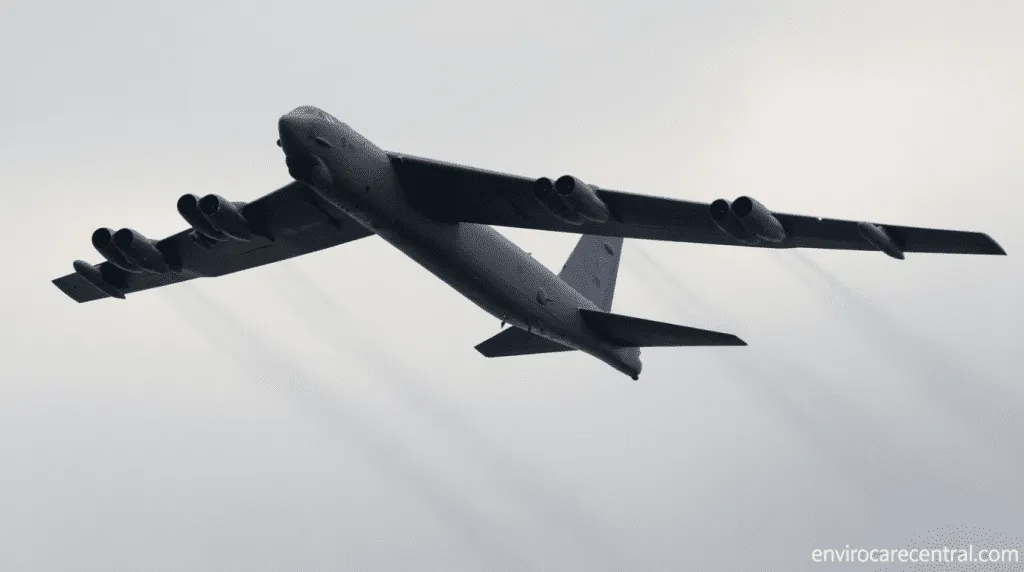
The B-52: Why the US still uses a plane from the 1960s to bomb its enemies
When the U.S. government targets adversaries, the Boeing B-52 Stratofortress remains a key asset in its aerial arsenal.
The B-52H variant, still in active service today, was introduced to the U.S. Air Force in 1961.
Over 63 years later, 76 of these bombers are still operational, forming the core of the USAF’s bomber fleet and comprising half of its total number.
Modernization efforts include Rolls-Royce engines, extending their service life well into the 2050s.
Sky News reports that B-52 bombers are currently en route to the UK, following Sir Keir Starmer’s recent shift in policy.
What sustains the B-52H’s longevity and appeal?
Buff is the informal nickname used by air force personnel to describe the aircraft.
Its massive size allows the Stratofortress to transport up to 70,000 pounds (31,751 kg) of ordnance, ranging from bombs to guided missiles.
The H variant is equipped to launch up to 20 cruise missiles from the air.
It can deploy both nuclear and conventional payloads, such as gravity bombs and nuclear-capable cruise missiles.
Despite its age, the B-52 maintains a range of 8,800 miles, extendable via aerial refueling, and cruises at 650 mph.
Its operational costs are lower than many of its modern counterparts.
It is piloted by a five-member crew, including an aircraft commander, pilot, radar navigator, navigator, and electronic warfare officer.
Initially developed as a nuclear deterrent, the B-52 was designed to transport thermonuclear weapons.
During the Vietnam War, the B-52 was extensively utilized for carpet bombing campaigns.
In 1972, the U.S. deployed B-52s to drop over 20,000 tonnes of ordnance on North Vietnam over 1
