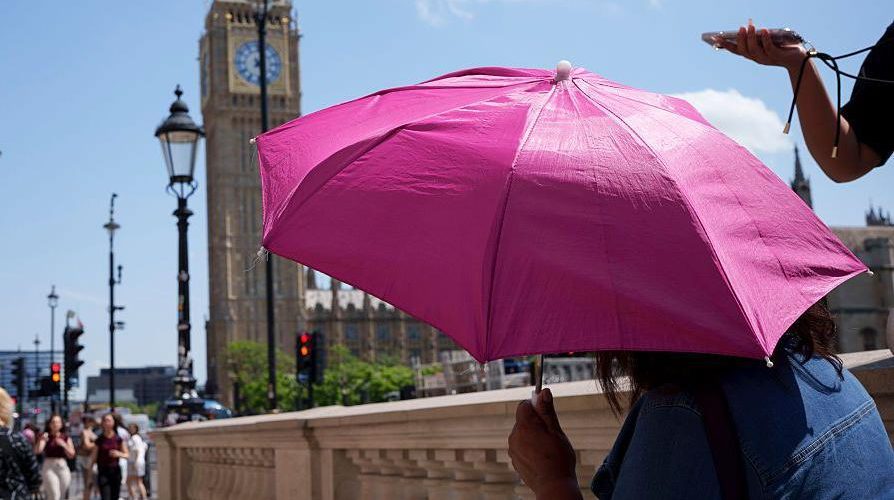
UK set for hottest June day on record as searing heat continues
UK set for hottest June day – The United Kingdom is on track to face its most extreme June day since records began, with meteorological forecasts predicting temperatures climbing beyond 35°C (95°F) on Tuesday. This surge in heat is anticipated to escalate throughout the week, potentially breaching the 40°C threshold in certain regions, a level just shy of the nation’s all-time maximum of 40.3°C, set in Coningsby, Lincolnshire, during the summer of 2022.
Red Warnings Signal Severe Conditions
Meteorological authorities, including the Met Office and UK Health Security Agency (UKHSA), have activated uncommon red heat alerts for Wednesday and Thursday across parts of the Midlands, south-east Wales, and southern England. These warnings underscore the potential for significant disruptions to health services and infrastructure, as prolonged exposure to high temperatures could lead to critical strain on systems. Amber alerts, which indicate heightened risk, are also in effect across broader regions of England and Wales, with temperatures forecast to reach mid- to high-30s Celsius.
“The red warning is a rare designation, reserved for exceptional circumstances where extreme heat poses an immediate threat to health, safety, and essential services,” stated a Met Office spokesperson.
As the heatwave intensifies, the Met Office has already issued its red warning for extreme heat on Monday, with the alert set to remain in place until 9pm on Thursday. This marks the first time such a warning has been issued for the region since July 2022, when the UK’s temperature record was surpassed. The current forecast suggests that the UK could narrowly challenge the 1976 June record of 35.6°C, which was set in the same month of the year.
Heatwave Impacts and Vulnerable Populations
The combination of high temperatures and elevated humidity this week is expected to create a more oppressive climate compared to earlier heatwaves. The UKHSA has highlighted that the prolonged exposure to heat, particularly in the high 30s, could lead to severe health consequences, including heat stress and heatstroke, which disproportionately affect the elderly, children, and individuals with chronic illnesses.
“Heat health alerts are designed to guide healthcare providers and emergency responders in mitigating risks during periods of intense weather,” explained UKHSA officials.
Overnight temperatures are also projected to remain unusually warm, with readings possibly staying between 17°C and 22°C. This will make it difficult for the body to cool down, exacerbating the effects of daytime heat. The current overnight temperature record for England is 22.7°C, set in 1976, while Wales holds a slightly lower mark of 20.0°C, recorded in 2023. These figures underscore the unprecedented nature of this heatwave.
A Historic Comparison
The present heatwave comes exactly 50 years after the 1976 summer, which is widely regarded as one of the most memorable in British history. During that period, the UK experienced 15 consecutive days of temperatures at or above 32.2°C (90°F), with London Heathrow recording 16 days of 30°C or higher. The conditions of that time, though severe, were not as extreme as the current scenario, which may push the boundaries of what was previously considered a record-breaking event.
As the climate continues to evolve, the conditions today could be even more intense. The 1976 heatwave, for instance, led to widespread power outages, transport disruptions, and a surge in hospital admissions due to heat-related illnesses. If the UK reaches 40°C in parts of the country, the strain on healthcare and infrastructure could be more pronounced than in the past. The Met Office’s red warning is not just a warning for weather; it is a call to action for communities to prepare for the challenges ahead.
Global Context and Local Responses
While the UK prepares for its potential June temperature record, similar heatwaves are occurring in other parts of the world. For example, France has already issued red heat alerts for more than half its territory, prompting school closures and public advisories. This global trend highlights the increasing frequency of extreme weather events, which are often linked to climate change. The UK’s situation, however, is unique in its timing and the way it coincides with the country’s traditional summer season.
Local authorities are urging residents to take precautions, particularly those in the most affected areas. The Met Office has emphasized that the red warning will be in place for over 24 hours, from Wednesday morning until Thursday night, meaning the heatwave will last for more than a week. This extended duration raises concerns about the long-term effects on both the environment and human health, as well as the potential for record-breaking temperatures in the coming days.
Adapting to the Heat
As the heatwave progresses, experts are advising the public on how to cope. Maintaining hydration, staying indoors during peak hours, and using cooling measures such as fans or air conditioning are critical. The UKHSA has also provided guidance on preventing heat-related illnesses, including checking on vulnerable neighbors and ensuring that homes are well-ventilated.
Despite these precautions, the challenge of keeping cool in a country unaccustomed to such prolonged heat is significant. High humidity levels are expected to make the weather feel even more sweltering, as the body’s ability to sweat and cool down is diminished. This creates a feedback loop where the environment becomes increasingly uncomfortable, and the risk of health complications rises.
Looking Ahead
The current heatwave is a stark reminder of how climate change is altering weather patterns. Scientists warn that such extreme conditions may become more common in the future, with the potential to occur earlier in the year. The June 2023 temperature record, if broken, could mark a pivotal moment in the UK’s meteorological history, signaling a shift in the timing and intensity of heat events.
For now, the focus remains on managing the immediate impacts of the heat. The Met Office’s red warning is a rare occurrence, highlighting the severity of the situation. As temperatures climb, the UK must remain vigilant, ensuring that both public and private sectors are equipped to handle the challenges posed by this unprecedented weather event.
Amid the heat, questions arise about the threshold for school closures. While the exact criteria vary, temperatures consistently above 35°C have historically prompted temporary shutdowns. Additionally, the article explores practical strategies for staying cool, such as using shade, wearing breathable clothing, and staying hydrated. These tips are essential for individuals and families navigating the discomfort of the heatwave.
As the week unfolds, the UK will be closely monitoring the situation, with the possibility of setting new records. The combination of historical context, current forecasts, and expert warnings paints a picture of a heatwave that is not only extreme in temperature but also in its implications for daily life and long-term climate trends.