
Houthi forces enter Iran conflict with missile attacks on Israeli military sites
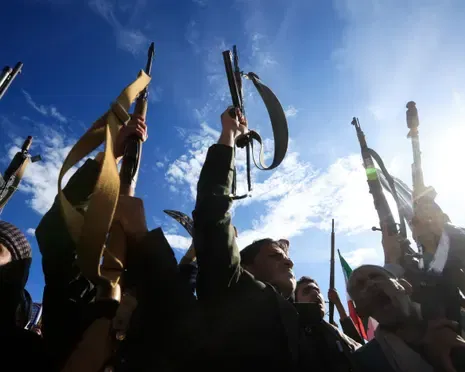
Houthi forces enter Iran conflict with missile attacks on Israeli military sites
The war between the US and Israel has expanded to involve Iran, with Houthi militias in Yemen launching missile strikes on Israeli military targets. This development signals a worrying intensification of the conflict, potentially disrupting global economic stability. Pakistan announced plans to host a regional summit on Monday, aiming to facilitate discussions among Middle Eastern leaders to resolve the crisis. However, the gathering of foreign ministers from Saudi Arabia, Turkey, and Egypt excluded the actual combatants, fueling skepticism about the US’s assertion of diplomatic progress.
Houthis, long-standing allies of Iran, claimed on Saturday they had launched a volley of ballistic missiles at “critical Israeli military sites” and vowed to continue their operations until hostilities ceased entirely. Israel confirmed intercepting a single missile from Yemen, though the broader implications of the strike remain under scrutiny. Intelligence reports from Reuters suggested the US is only certain about neutralizing a third of Iran’s missile and drone arsenal, despite claims of a more substantial impact.
In another instance of escalation, US media reported that a missile and drone attack on Saudi Arabia’s Prince Sultan airbase injured at least 12 American troops, two critically. Drones also targeted Kuwait International Airport, damaging its radar systems. The Houthis’ control over Yemen’s most populated regions now threatens the Bab al-Mandab Strait, a vital passage at the southern end of the Red Sea. This choke point is crucial for energy and trade flows, and its closure could exacerbate the economic strain caused by Iran’s near-complete blockage of the Hormuz Strait.
Regional Diplomacy and Strategic Concerns
With the war entering its second month, Pakistan has attempted to serve as a peace mediator. Prime Minister Shehbaz Sharif and Army Chief Field Marshal Asin Munir hoped to revive US-Iran negotiations, though evidence of such efforts remains unclear. Donald Trump asserted, without proof, that talks had already begun and were “progressing well,” while Tehran denied any prior communication.
“The decision by the Houthis to join the broader Middle East conflict marks a serious and deeply concerning escalation,” said Farea Al-Muslimi, a research fellow at Chatham House. “The potential impact on key commercial maritime routes, especially in the Red Sea and the Bab al-Mandab strait, cannot be overstated. At the same time, vital economic and military infrastructure across the Gulf region may become increasingly exposed.”
Iran’s central command revealed an attack on a Ukrainian anti-drone system depot in Dubai, which they claimed was aiding US forces. No immediate confirmation came from Dubai authorities. Since the war began, Ukraine has supplied anti-drone technology to Gulf states, leveraging its experience with Russian strikes using Iranian-designed aircraft. President Volodymyr Zelenskyy announced on Saturday that his country and the UAE had agreed to strengthen defense cooperation, with a visit to Qatar underscoring Ukraine’s efforts to broaden its alliances.
Escalation in Weaponry
Further signs of conflict expansion emerged with reports of cluster munitions being deployed. Analysts from Bellingcat identified mines found near Shiraz’s missile base as Gator anti-tank mines, a type of cluster munition banned by over 100 nations due to its indiscriminate use. Although the US is the sole party in the conflict equipped with these weapons, Tehran has employed ballistic missiles with cluster warheads in attacks on Israel. In response to March 16 strikes, US Central Command chief Adm Brad Cooper described cluster bombs as “an inherently indiscriminate type of munition.”
