
Iran gives negative response to US ceasefire plan amid push for talks
Iran Gives Negative Response to US Ceasefire Plan Amid Push for Talks
On Wednesday, Iranian officials voiced initial reservations about a US ceasefire initiative, even as intermediaries hinted at potential direct negotiations by the weekend. According to reports, representatives from Pakistan, who reportedly delivered the US plan to Tehran, described it as a 15-point proposal. The plan would include sanctions relief for Iran, dismantling its nuclear programme, curbing missile usage, and reopening the strait of Hormuz—a critical passage for 20% of global oil supply. An Egyptian official also noted that the proposal would limit Iran’s backing of armed groups in the Middle East.
Historical Resistance and Doubts
Some elements of the plan had previously proven challenging in earlier talks, with key issues remaining unresolved prior to the conflict’s onset. A senior Iranian official, speaking to Al Jazeera, called the proposal “extremely maximalist and unreasonable.” Others indicated the country was still assessing the offer, though many viewed it as overly favorable to US interests. Iran had earlier dismissed diplomatic efforts, mocking President Donald Trump and claiming Washington was negotiating with itself.
“Our first and last words have been the same from day one, and it will stay that way: someone like us will never come to terms with someone like you,” said Lt Col Ebrahim Zolfaghari, an Iranian military spokesperson.
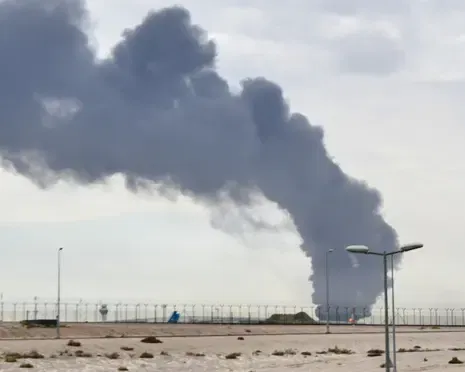
Meanwhile, Tehran intensified attacks on Israel and Gulf nations, including a strike that ignited a massive fire at Kuwait International Airport. Israel continued its aerial campaign against Iran. The US had previously attacked Iran’s nuclear facilities during the 12-day conflict with Israel last summer and launched its latest war as progress was nearing a comprehensive agreement.
US Negotiation Efforts and Uncertainty
Trump claimed the US was in talks with an Iranian faction engaging with his son-in-law Jared Kushner, special envoy Steve Witkoff, Secretary of State Marco Rubio, and Vice President JD Vance. Reports indicated Kushner and Witkoff had advocated a one-month ceasefire during discussions. However, it remained unclear who exactly the US was communicating with, as Iran’s foreign ministry and military officials denied Trump’s assertions.
Iranian leaders expressed skepticism about resuming talks with the US, citing prior attacks on their country during negotiations. The US had targeted Iran’s nuclear infrastructure, while Israel eliminated several of its senior figures, including pragmatic officials like Ali Larijani, the secretary of the supreme national security council. This raised concerns for the safety of Iranian representatives involved in talks.
Domestic Pressure and Public Sentiment
Domestically, pressure mounted on Trump to end the war in Iran, as attacks on Gulf energy infrastructure and the near-complete blockage of Hormuz contributed to global price spikes. Oil prices dipped after the 15-point-plan was unveiled, as investors anticipated an end to the worst energy crisis in decades. A new poll revealed that 59% of Americans believe the US war in Iran has “gone too far,” and Trump’s approval rating hit a record low of 36%, linked to rising fuel costs and the conflict.
Despite diplomatic efforts, Israel pushed to continue its military operations, aiming to weaken the Iranian regime further. The US, meanwhile, bolstered its military presence in the Middle East, with at least 1,000 troops from the 82nd airborne division and 5,000 additional marines expected to be deployed, according to the Associated Press.
