
Mojtaba Khamenei was hurt in strike that killed his father, Iran’s Cyprus ambassador confirms
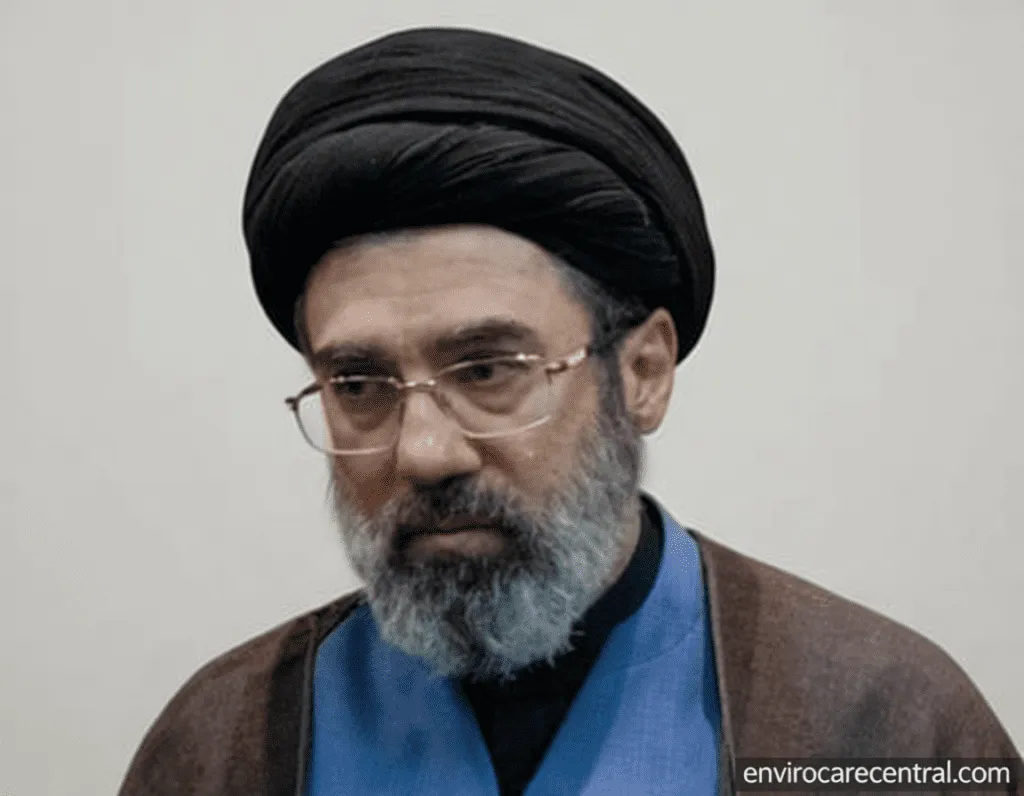
Mojtaba Khamenei was hurt in strike that killed his father, Iran’s Cyprus ambassador confirms
Family of new leader shares details of attack
Alireza Salarian, Iran’s envoy to Cyprus, revealed that Mojtaba Khamenei, the nation’s new supreme leader, was injured during the February 28th strike that claimed the lives of six relatives, including his father. The assault targeted the residence of the late Ayatollah Ali Khamenei, leaving the presidential complex in Tehran partially destroyed. Salarian emphasized the lack of public acknowledgment of Mojtaba’s wounds, stating: “He was also present and injured in that bombardment but I haven’t seen that reflected in foreign news.”
“I have heard he was hurt in his legs and hand and arm… I think he is in the hospital because he is injured,” Salarian told the Guardian. “I don’t think he is comfortable [in any condition] to give a speech.”
Attack coincides with US-led campaign
The strike took place on the opening day of US-led aerial operations against Iran, marking the 10th day of Ramadan. Salarian recounted that Ayatollah Ali Khamenei was at his home with family members, including Mojtaba’s wife, Zahra, and his son Mohammad Bagher, who perished in the attack. Iranian media later reported that Ali Khamenei’s wife, Mansour, succumbed to her injuries three days afterward.
“The [late] supreme leader was killed with his wife, daughter, son-in-law, and the 14-month-old baby of his daughter,” Salarian explained. “They were inside their house near the presidential office. Top commanders were also killed as they were invited.”
Reactions from political figures
Yousef Pezeshkian, a senior government advisor and son of Iran’s president, acknowledged Mojtaba’s injury but omitted specifics. In a Telegram post, he wrote: “I heard news that Mr Mojtaba Khamenei had been injured. I have asked some friends who had connections. They told me that, thank God, he is safe and sound.”
An Iranian official also stated to Reuters that Khamenei sustained minor injuries but remained active. Earlier this week, state television referred to the new leader as a “wounded veteran of the Ramadan war,” though no details were provided about his condition.
International concerns over security
Salarian noted the strategic timing of the attacks, which caught the political and diplomatic elite off guard despite prior military preparations. “Nobody believed, expected or predicted the attacks when we had finished a third Geneva round of negotiations,” he said, highlighting Trump’s perceived disregard for international legal norms.
Western intelligence agencies suspect the new leader is being shielded from public view to prevent potential attacks. “We know the US, and especially Israel, will target him,” Salarian remarked, noting the country’s longstanding ties with Cyprus despite tensions.
Population displacement and nuclear ambitions
Estimating casualties, Salarian stated that the war in Iran had resulted in approximately 1,400 deaths by Tuesday. With Tehran’s population of 14 million, he observed that “around half of its population” had fled the city due to the bombings. The attack also underscored a shift in leadership dynamics, as the late supreme leader had resisted his son’s succession, opting for an elected process over a dynastic system.
“The late supreme leader himself announced we are not going to have nuclear weapons based on Iran’s religious code, which forbids their use,” Salarian added. “He was elected. [After the attack] top-ranking clergymen said: ‘This is your job; you have to obey.’”
