
What is the strait of Hormuz and can the US stop Iran from blocking it?
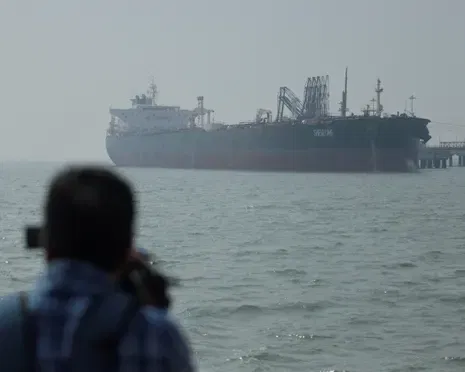
Strait of Hormuz: A Critical Maritime Passage
The strait of Hormuz, a vital waterway, has faced disruptions as Iran closed the key passage to maritime traffic. Over 1,000 cargo vessels, primarily oil tankers, were halted by the conflict between Israel and the US, which intensified pressure on Tehran. Despite proposals from the Trump administration to resume shipping, Iranian attacks on tankers and mining activities in the strait have stalled efforts to restore normal flow. Energy prices have surged as a result, but the planned naval escorts remain unimplemented.
Geography and Strategic Significance
The strait serves as the sole maritime link between the Gulf and the Gulf of Oman. It transports approximately a quarter of the world’s liquefied natural gas and seaborne trade from Gulf nations. Shipping is confined to two narrow lanes, each about two miles wide, separated by a meridian. At its narrowest, the strait measures 21 nautical miles (24 miles), with the deepest channel bordered by Iran’s coast and the Musandam peninsula in Oman.
Historical Context and Threats
Throughout its history, the strait has been a strategic target. During the Iran-Iraq war of the 1980s, it became central to the “tanker war,” prompting the US navy to launch Operation Earnest Will in 1987. This operation, the largest convoy effort since World War II, aimed to safeguard trade routes. Today, Iran has escalated its tactics, attacking ships and reportedly deploying mines, effectively closing the strait to commercial traffic.
US Response and Challenges
US military planners anticipated Iran’s potential to block the strait, yet the Trump administration seemed unprepared for the scale of the response. Energy Secretary Chris Wright acknowledged the navy’s readiness issues, stating,
“It’ll happen relatively soon, but it can’t happen now. We’re simply not ready.”
He noted that current resources are prioritized for destroying Iran’s military assets, not securing the passage. Analysts initially expected Iran to keep the strait open to export its own oil, but the regime’s perceived existential threat led to a more aggressive stance.
Iran’s use of small, fast boats for mine-laying highlights the complexity of countering such moves. These vessels, capable of operating near the Iranian coast, allow for rapid attacks on ships. With transit lanes as close as 3 to 4 miles from shore, drones and missiles have minimal flight time, giving vessels less than two minutes to react. Last week, Iran damaged an oil tanker in Iraqi waters using a remote-controlled explosive boat, underscoring the threat.
Adel Bakawan, director of the European Institute for Studies on the Middle East and North Africa, emphasized the strait’s vulnerability:
“Neither France, the United States, an international coalition, nor anybody is in a position to secure the strait of Hormuz.”
Even US naval ships would face risks, requiring additional air cover beyond their own defenses. Iran’s arsenal includes conventional mine-laying vessels and small craft, enabling covert deployment of mines as deep as 164ft beneath the surface.
