
Can coffee thrive in the shadow of the city?
Can coffee thrive in the shadow of the city?
Can coffee thrive in the shadow –
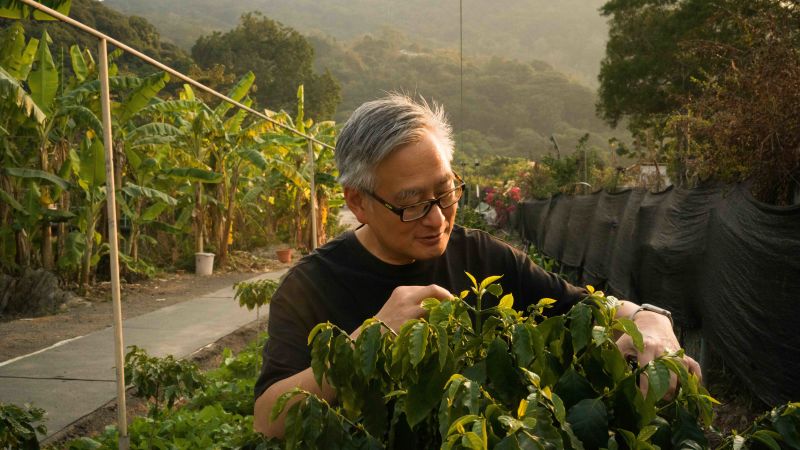
Deep within the serene embrace of Hong Kong’s Lantau Island, a small roastery hums with activity. The rhythmic sound of a coffee machine echoes through the attic space of LCC Roastery, where freshly roasted beans are being prepared for sale at an artisanal coffee shop. Owner Ringo Lam takes pride in the diverse array of beans available, each labeled with distinct flavor notes: “Ethiopia” promises a blend of “jasmine, floral, tropical fruit, and pineapple” aromas, while a Colombian selection hints at “butter, caramel, and dark chocolate.” Yet, among these, one variety holds a special place—“Lantau Bean.” This unique offering represents Lam’s bold endeavor to challenge conventional wisdom: growing coffee in the heart of a bustling metropolis.
The Vision Behind Lantau Bean
Lam, a 55-year-old former tech entrepreneur, embarked on this journey six years ago during a trip to Panama. Inspired by the practices of local farmers, he brought home 100 coffee seeds, hoping to cultivate a new crop in Hong Kong. The idea seemed ambitious, even risky. Coffee, traditionally associated with high-altitude regions, was thought to require specific climatic conditions. But Lam’s dream was to prove that urban spaces could still yield quality beans.
“People often think of countries like Ethiopia or Colombia when they imagine coffee,” Lam told CNN, humorously listing them as destinations one might not prioritize for a weekend getaway. “But here’s the twist: coffee doesn’t have to be far from home.” His words underscore a growing trend in East Asia, where the demand for coffee has surged over the past decade. Countries like Vietnam and Indonesia, with their tropical climates, have long been leaders in coffee production. However, places like Japan and China—particularly Hong Kong—have lagged behind, hindered by harsh winters and limited space for cultivation.
Hong Kong’s Coffee Potential
Despite its status as a financial hub, Hong Kong has over 700 cafes, a testament to its evolving coffee culture. Yet, the city has never been seen as a viable region for growing coffee beans. This is partly due to its geographical position: sitting at 22 degrees north of the equator, Hong Kong falls within the “coffee belt,” the region where most high-quality beans thrive. However, the city’s low altitude and extreme cold periods have made it difficult to grow the plants.
Katie Chick, an arboriculture instructor at the University of Hong Kong, explains that while high altitudes enhance flavor complexity, they are not the sole determinant of a coffee plant’s success. “The key is whether the area lies within the coffee belt,” she said. “Hong Kong meets that criterion, but its elevation is a limiting factor.” Chick’s center manages the largest coffee farm in the city, housing 800 trees that produce up to 50 kilograms of beans annually. Originally designed to revitalize a rural village, the project has since expanded to local markets, showcasing the potential of urban agriculture.
Lam’s initiative, however, is rooted in personal passion. After witnessing the meticulous processes of Panamanian farmers, he returned to Lantau Island with a mission: to grow coffee where few had dared. The island, known for its lush landscapes and tranquil pace, became the ideal testbed. “We’re not just growing coffee; we’re growing a story,” Lam remarked. His first attempt involved transplanting seeds to five farmers on the island, with more joining over time.
“Not every seed survives the journey,” Lam said, recounting the trial-and-error phase. “But out of 100, about 80 made it.” This success laid the foundation for a community-driven effort. Today, 25 farmers nurture approximately 400 coffee trees on Lantau, each step a testament to perseverance. Earlier this year, they achieved a record harvest, collecting 10 kilograms of coffee cherries—nearly 10 times the previous year’s yield.
Overcoming Challenges
While Hong Kong’s climate is conducive to coffee growth, its urban landscape poses unique challenges. Exorbitant land prices and the city’s dense infrastructure have made it more practical to import grains and vegetables than to grow them locally. Coffee, with its specific needs, seemed an even greater stretch. Yet, Lam and his team have managed to transform this perception.
“It’s not just about altitude,” Chick explained. “The fluctuating temperatures in mountainous regions can accelerate chemical reactions in the beans, contributing to a more intricate flavor profile. But Hong Kong’s low-lying farms still produce viable results.” The city’s climate, though not ideal for high-altitude cultivation, offers a different kind of opportunity. By carefully selecting species and optimizing growing conditions, the team has created a sustainable model.
This initiative has sparked curiosity among locals. “When someone grows coffee so close, people start to question, ‘Can we really do this?’” Lam said, highlighting the shift in mindset. What began as a niche project has now become a symbol of innovation. The Lantau Bean, once an afterthought, is now a point of pride for the community.
A New Chapter for Coffee in Hong Kong
The success of the Lantau project has broader implications for Hong Kong’s agricultural landscape. As the city continues to grow, its residents are increasingly seeking locally sourced products. Coffee, once a luxury import, is now a potential local crop. This shift reflects a cultural evolution, where the traditional preference for tea is being complemented by a rising interest in coffee.
Lam’s journey is not without hurdles. The initial skepticism from the public, the technical challenges of adapting to Hong Kong’s climate, and the logistical complexities of managing a farm in a densely populated region all required creative solutions. Yet, the project’s progress demonstrates that innovation can thrive even in unexpected places.
As the Lantau Bean gains traction, it’s clear that the city’s coffee story is just beginning. Lam and Chick’s efforts have proven that geographical limitations need not define a region’s potential. With continued support and experimentation, Hong Kong could one day be known not just for its skyline, but for its coffee-growing heritage.
“It’s a small step, but it’s a step forward,” Chick said. “Hong Kong may not have the altitude of traditional coffee regions, but it has the determination to make it work.” This sentiment echoes the spirit of the Lantau project, a bold experiment that challenges the boundaries of urban agriculture.
For Lam, the dream of cultivating coffee in the shadow of the city has become a reality. The roastery’s bustling activity and the community’s growing interest in the Lantau Bean mark a new era for coffee in Hong Kong. As the city’s residents begin to taste the fruits of this labor, the question of whether coffee can thrive in the metropolis is no longer just hypothetical—it’s a living, breathing possibility.
