
Nine in 10 families in China own a home. But is the property-owning dream being tested?
Nine in 10 Chinese Families Own Homes: Is the Dream at Risk?
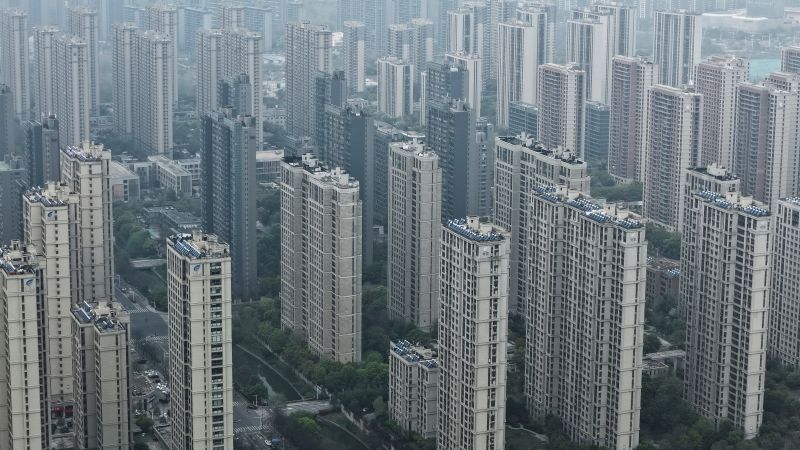
Nine in 10 families in China have achieved homeownership, a milestone that has long symbolized economic stability and social progress. For decades, this trend has been a cornerstone of the nation’s development, intertwining personal ambition with national policy. The shift began in the 1990s, when the government transitioned from welfare housing to market-driven models, fostering a culture where property ownership is often seen as a fundamental life goal. While many in the West view homes as investments, in China, they represent family legacy and societal contribution. Yet, recent developments suggest this ideal may be under pressure.
Homeownership as a Cultural Imperative
Homeownership in China is not just an economic choice—it’s a deeply cultural expectation. Traditionally, property has been tied to Confucian values, where securing a home is equated with responsibility and success. According to Eric Fong, a sociology professor at the University of Hong Kong, this mindset has shaped generations of Chinese citizens. “Owning a home is more than a financial decision; it’s a marker of maturity and stability,” he explains. This belief, reinforced by government policies, has made housing a central pillar of personal and family life.
The move toward private housing gained momentum in the 1980s as economic reforms reshaped China’s landscape. Before this, employer-provided housing was the norm, but as the market opened, individuals began shouldering the costs. By the 1990s, subsidies and incentives made homeownership accessible to millions. Huang Youqin, a geography and planning professor at the University at Albany, notes that this period marked a turning point. “People who once rented could now afford to buy, transforming how families planned for the future,” she adds. This shift redefined not only financial behavior but also national identity.
The Housing Bubble and Its Consequences
The rapid rise of property prices in the early 2010s created a booming market, but it also bred vulnerabilities. With housing often being the primary avenue for wealth growth, many families invested heavily, driving up demand and prices. However, the peak of this trend led to speculative practices and overbuilding, resulting in oversupply and inflated debt for developers. By 2020, the central government stepped in to stabilize the sector, which had previously accounted for 30% of economic activity. While these measures curbed excess, they also triggered a sharp decline in prices, unsettling long-time homeowners.
Now, as new home sales drop to levels not seen since 2014, the dream of homeownership is being reexamined. Last year’s sales totaled just 7.3 trillion yuan ($1.06 trillion), a stark contrast to the 16.2 trillion yuan ($2.3 trillion) recorded in 2021. Economists at Macquarie Financial Group highlighted the trend, warning that the decline showed “no end in sight.” This uncertainty has made many potential buyers hesitant, even as cultural pressures to own persist.
Shifting Priorities Among Younger Generations
For younger generations, the pressure to own a home is being tempered by practical considerations. Cai Youcheng, a 36-year-old graphic designer in Beijing, exemplifies this trend. “Renting feels like a journey without a destination,” he says, emphasizing the lack of control over home decor. Yet, he acknowledges the financial benefits of renting. “Owning a home is still the dream, but for now, stability comes first.” His perspective reflects a broader hesitation among Chinese families, who are now weighing the long-term costs of property ownership against immediate needs.
This generational shift highlights the evolving dynamics of homeownership in China. While the concept remains culturally significant, the economic challenges—such as high mortgage rates and rising living costs—are forcing a reevaluation. Some families are opting for shared ownership or renting, while others delay purchases to save for education or retirement. The housing market, once a symbol of national pride, now faces the question of whether it can sustain its role as a defining feature of Chinese life.
