
Nearly a third of National Park island home to rare wildlife has burned in spate of Southern California wildfires
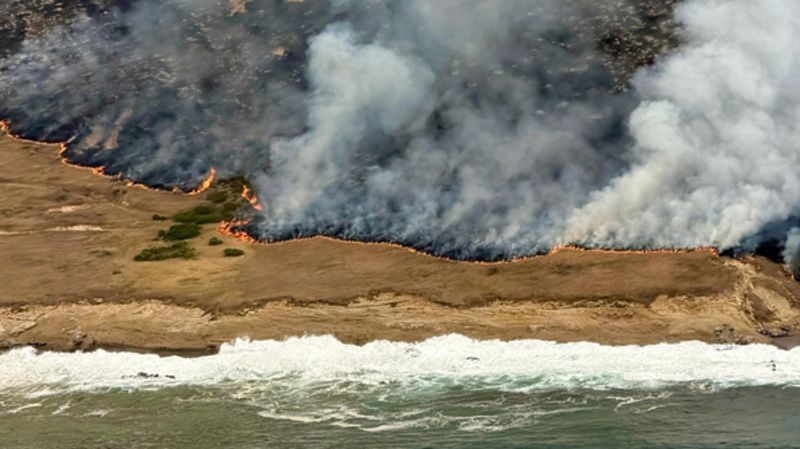
Nearly a Third of Santa Rosa Island National Park Burned in Southern California Wildfires
Nearly a third of National Park island, part of the Channel Islands National Park, has been consumed by wildfires sweeping through Southern California. The blaze, which ignited earlier this week, has expanded to over 17,000 acres, surpassing state records for 2026. According to the California Department of Forestry and Fire Protection, the fire is now 26% contained, yet its devastation of the island’s delicate ecosystem remains a pressing issue. The area is renowned for its rare and endemic species, many of which are found exclusively on this remote landmass, making the loss especially significant for conservation efforts.
Evacuations and Ecological Threats
Evacuations have intensified as the fire threatens both human settlements and the island’s biodiversity. Santa Barbara County Fire Department officials reported that two historic structures on the island have been lost, while 11 National Park employees were evacuated. Visitor access has been suspended to ensure safety, with the park emphasizing the urgent need to safeguard its fragile habitats. The Torrey Pine grove, a critically endangered species unique to Santa Rosa Island, faces the risk of complete destruction as flames move through its territory.
“Santa Rosa Island’s Torrey Pine grove is a treasure trove of ecological diversity,” stated a National Park Service representative. “Its survival is tied to the speed at which we can control this fire.”
Though the fire’s spread has slowed in recent days due to calmer winds, officials caution that the situation remains unpredictable. Aerial firefighting operations have helped contain the blaze, but the National Interagency Fire Center noted that the flames were previously aggressive, consuming large swathes of vegetation in a short time. The National Park Service is leading the investigation into the fire’s origin, which is believed to be human-caused, though details are still under review.
Regional Wildfire Impact and Response
The wildfires on Santa Rosa Island are part of a broader regional crisis affecting Southern California. In Riverside County, the Bain Fire has displaced over 700 residents, with 1,100 under evacuation orders and 1,407 warned of potential danger. The blaze, now 25% contained, has grown to 1,456 acres, according to CalFire spokesperson Maggie Cline De La Rosa. Four individuals were injured, with one sustaining a traumatic wound, underscoring the fire’s immediate human toll.
“The Bain Fire serves as a stark reminder of the risks faced by communities in this region,” De La Rosa said. “We’re coordinating efforts to protect both people and the natural environment.”
Meanwhile, the Verona Fire has caused injuries to two firefighters and one civilian, with the latter declining medical transport. In Ventura County, the Sandy Fire has forced the evacuation of nearly 44,000 residents, reaching 1,700 acres by Wednesday morning. Over 900 firefighters are currently battling the flames from the air and ground, highlighting the scale of the emergency across the state.
Conservation Concerns and Island Significance
Santa Rosa Island, one of the Channel Islands, holds a unique place in the National Park system as a hub for rare flora and fauna. Its isolation has allowed for the development of distinct ecosystems, with over 46 endemic species, including the Torrey Pine, thriving in its environment. The loss of nearly a third of the island’s landmass has raised alarms among scientists and conservationists, who fear the long-term consequences for these species.
“The National Park’s ecosystem is a living laboratory for biodiversity,” said a wildlife biologist. “Losing such a large portion of it could have irreversible effects.”
Experts warn that the fire not only threatens the island’s endemic species but also disrupts the natural balance of the region. The National Park Service is working alongside state agencies to assess the damage and plan restoration efforts. While the immediate priority is containment, the long-term focus is on preserving the island’s ecological legacy and protecting its role as a critical habitat for endangered wildlife.
