
Police officers who defended US Capitol on January 6 sue to stop Trump’s ‘anti-weaponization’ fund
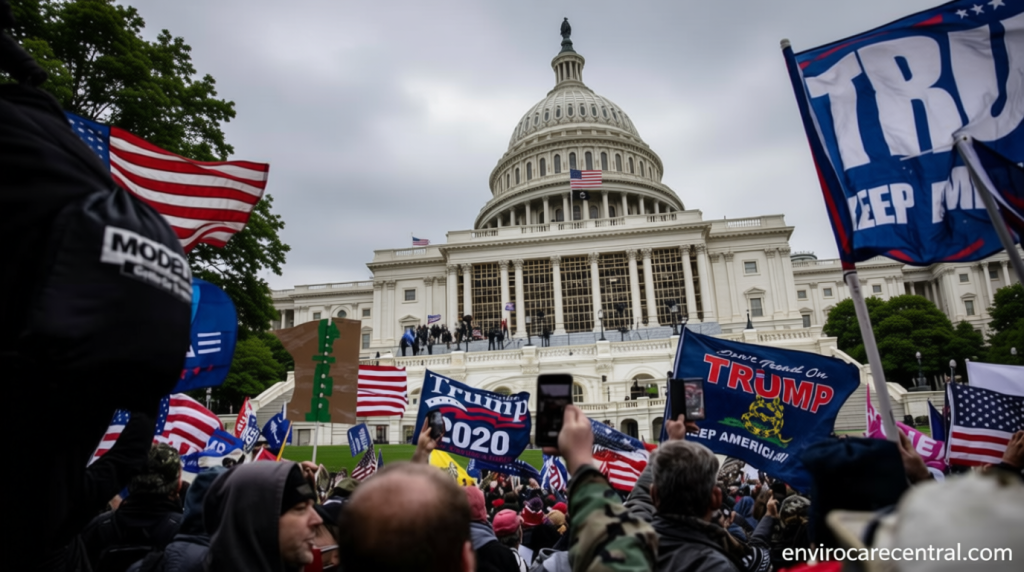
Police Officers Who Protected US Capitol During January 6 Protest Trump’s $1.8 Billion ‘Anti-Weaponization’ Fund
Police officers who defended US Capitol – On Wednesday, law enforcement personnel who defended the United States Capitol during the January 6, 2021, attack launched a legal challenge against the Trump administration, seeking to prevent the implementation of a newly established $1.8 billion fund. The initiative, dubbed the Anti-Weaponization Fund, is designed to support allies of former President Donald Trump who assert they were subjected to unfair scrutiny by earlier federal administrations. The suit, filed in a federal court, was initiated by Harry Dunn, a former member of the US Capitol Police, and Daniel Hodges, a current officer with the Washington, DC, Metropolitan Police Department. Together, they argue that the fund undermines constitutional principles and breaches federal statutes by enabling payments to individuals linked to the January 6 assault and funding paramilitary groups.
Fund’s Alleged Violations of Federal Law
The lawsuit contends that the Anti-Weaponization Fund contravenes a key clause of the 14th Amendment, which prohibits the government from settling debts incurred in support of an insurrection or rebellion against the United States. According to the plaintiffs, this provision is being overlooked by the administration, which has directed taxpayer funds to reward those who participated in the Capitol attack. The legal team of Dunn and Hodges further asserts that the fund’s establishment violates the Administrative Procedure Act, a law that mandates federal agencies to comply with specific procedural requirements when making decisions. The suit highlights that officials created the fund without securing the attorney general’s approval, as required by another federal provision.
“The administration’s decision to allocate $1.776 billion into the fund to resolve the Trump v. IRS lawsuit was not in the best interest of the United States,” the plaintiffs’ lawyers stated in the 29-page filing. “It represents a misuse of public resources aimed at legitimizing past acts of violence and shielding those who attacked law enforcement from accountability.”
According to the suit, the fund could be used to compensate individuals involved in the January 6 riot, potentially including members of groups like the Proud Boys, who are accused of leading violent efforts to breach the Capitol. The plaintiffs argue that this would provide a financial incentive for future acts of aggression, signaling to potential offenders that they can act with impunity. “The fund will grant their violent actions a legal seal,” the legal team wrote, “and embolden those who threaten the lives of law enforcement officers to continue their attacks.”
Political Motives and Legal Justification
The officers claim that the fund is a deliberate effort to shift the blame for the Capitol attack onto previous administrations. They argue that by funding allies and rioters, the Trump administration is using the legal system to shield itself from criticism. The lawsuit also connects the fund to a $10 billion lawsuit Trump filed against the Internal Revenue Service earlier this year, which was settled with taxpayer money. The plaintiffs insist that this settlement was not properly justified under federal law, as it bypassed necessary checks and balances.
“The payment of $1.776 billion into the Anti-Weaponization Fund to settle Trump v. IRS was patently not ‘in the interest of the United States,’” the lawyers wrote. “Rather, it was a calculated misappropriation of public funds orchestrated by the President to reward his supporters and those who committed violence under his direction.”
The case comes amid heightened scrutiny of the fund, which was unveiled after a federal court ruled in favor of Trump’s claim that the IRS had acted unfairly in an audit of his tax returns. The fund’s creation has sparked debate about the balance between political loyalty and legal accountability. It also raises questions about the role of the Department of Justice in ensuring that federal resources are used appropriately. The lawsuit challenges the administration’s authority to unilaterally decide who qualifies for compensation, emphasizing that the process should involve broader oversight.
Testimony from the Attorney General’s Office
Acting Attorney General Todd Blanche, who previously served as Trump’s personal attorney, faced questions about the fund’s eligibility criteria during a Senate appropriations hearing. When asked whether those who assaulted law enforcement on January 6 could receive payments, Blanche stated that the five-member commission reviewing claims would consider all relevant factors. However, he added that the attorney general’s office would have the final say in selecting the fund’s members, with Trump retaining the power to replace them at will.
“Blanche said he would ‘definitely encourage the commissioners to take everything into account when determining who should get compensation.’ But he was questioned about the possibility of awarding funds to individuals convicted of violent acts against police officers.”
Democratic Senator Jeff Merkley pressed Blanche on the issue, noting the apparent contradiction in allowing payouts to those who had committed violent offenses. “Why not this specific issue of being convicted for attacking law enforcement?” Merkley asked. Blanche dismissed the concern, stating that the only illegality in the situation was the prior administrations’ “brazen weaponization” of federal resources to target those with opposing views.
Broader Implications of the Fund
The lawsuit underscores concerns that the fund could become a tool for political retribution, rewarding loyalty and silencing dissent. The plaintiffs assert that by financing paramilitary groups and compensating rioters, the administration is effectively normalizing the violence that occurred on January 6. They argue that the fund’s existence sends a dangerous message to the public, implying that violent actions against law enforcement are justified and even encouraged.
In a statement, a DOJ spokesperson defended the fund, stating, “The only thing illegal and corrupt about this situation is the prior administrations’ weaponization of federal resources to retaliate against those with opposing political beliefs.” The spokesperson added that the Department of Justice would continue to challenge such measures, ensuring that individuals who suffered injustice are compensated fairly.
The case also highlights the broader political context surrounding the fund. Vice President JD Vance, when asked about its purpose, declined to rule out the possibility that participants in the Capitol attack could receive financial support. “We do have people who were accused of attacking law enforcement officers,” Vance said, suggesting that the fund’s eligibility criteria remain open to interpretation. This ambiguity has fueled criticism from lawmakers and legal experts, who view the fund as a potential mechanism for subsidizing political conflict and weakening the rule of law.
As the lawsuit progresses, it has become a focal point for debates about the separation of powers and the use of taxpayer funds to support political objectives. The plaintiffs’ challenge seeks not only to block the fund’s implementation but also to establish a legal precedent that ensures future actions by the executive branch are subject to rigorous scrutiny. Their argument hinges on the idea that federal resources should be used to promote justice, not to reward those who threaten it.
Conclusion: A Fight for Constitutional Integrity
The officers’ lawsuit represents a critical effort to hold the Trump administration accountable for its use of public funds. By framing the fund as an unconstitutional overreach, they aim to reinforce the principle that government actions must align with legal standards, even when political stakes are high. The case has drawn attention to the tension between executive power and judicial oversight, with implications for how future administrations might allocate taxpayer resources to support their agenda.
With the federal judge now tasked with deciding the fund’s legality, the outcome could set a precedent for similar initiatives in the future. The lawsuit also serves as a reminder of the role law enforcement played on January 6, as Dunn and Hodges describe their actions as a stand for democracy and the rule of law. Their legal battle underscores the ongoing struggle to ensure that federal actions remain transparent and just, even in the face of political pressure.
