
A new Ebola outbreak is confirmed in a remote Congo province, with 65 deaths recorded
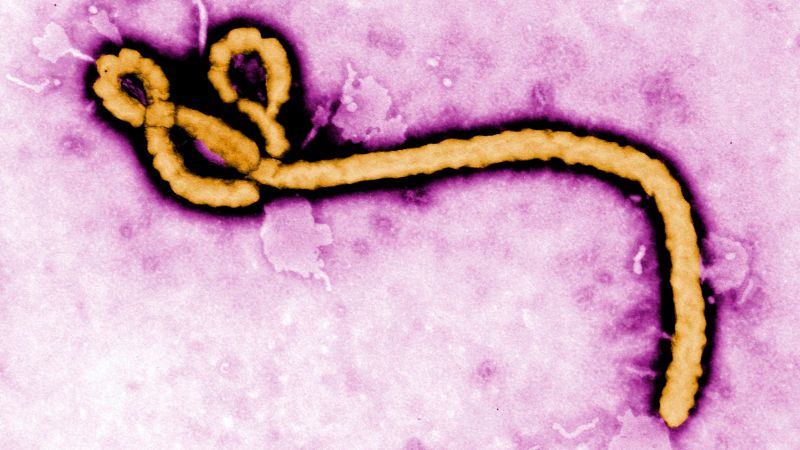
A new Ebola outbreak is confirmed in a remote Congo province, with 65 deaths recorded
A new Ebola outbreak is confirmed – The Africa Centres for Disease Control and Prevention (Africa CDC) announced on Friday that a fresh Ebola outbreak had emerged in the Ituri province of the Democratic Republic of the Congo, with 246 suspected cases and 65 fatalities reported to date. The confirmation comes as health officials in the region work to contain the spread of the virus, which has been detected in two distinct health zones—Mongwalu and Rwampara. These areas, located in the eastern part of the country, are known for their dense populations and limited infrastructure, complicating efforts to track and manage the outbreak.
Neighbors to the region have also observed signs of the virus. Uganda confirmed one death from an Ebola case linked to a Congolese man who had been hospitalized in Kampala three days prior to his passing. Officials there described the case as “imported” from Congo, indicating that the virus crossed borders into the East African nation. Despite the death, Uganda has not yet identified any local transmission, though authorities have taken swift action to isolate the man’s contacts and prevent further spread.
Investigating the Virus Variant
While the Africa CDC initially reported 65 deaths, only four have been verified through laboratory testing. This discrepancy highlights the ongoing challenges in diagnosing Ebola cases, particularly in remote areas where access to advanced diagnostic tools is limited. The agency emphasized that the virus responsible for the current outbreak may differ from the Ebola Zaire strain, which has been the dominant cause of outbreaks in Congo in the past. Preliminary genetic sequencing suggests a different variant, though results remain under review, and the CDC is coordinating with international partners to refine its understanding.
Dr. Tedros Adhanom Ghebreyesus, director-general of the World Health Organization (WHO), provided additional context during a press briefing on Friday. He noted that the WHO had dispatched a team to Congo to support investigation efforts and collect samples. “Initial findings were inconclusive, but a more recent analysis has confirmed the presence of the virus,” Tedros stated. The organization has pledged $500,000 in emergency funding to assist Congo’s response, citing the country’s proven ability to manage outbreaks effectively in the past.
Vaccine Availability and Strain Variants
During the previous Ebola outbreak in the DRC, which ended with 43 deaths five months prior, the WHO noted that the country had a stockpile of treatments and 2,000 doses of the Ervebo vaccine. This vaccine, developed specifically for the Ebola Zaire strain, has been effective in reducing mortality rates in past outbreaks. However, it does not offer protection against other strains, such as the Sudan or Bundibugyo variants, which are also known to cause severe illness.
Uganda’s health ministry revealed that the recently confirmed case involved the Bundibugyo virus, a strain endemic to the country. The patient, who had been admitted to a hospital in Kampala before his death, was tested posthumously after the Africa CDC’s official confirmation. Officials stressed that the deceased’s body had been returned to Congo, where it would be studied to determine whether the virus had originated locally or was brought in from neighboring regions.
Regional Challenges and Future Concerns
Ituri province, situated in a secluded eastern region of the DRC, presents unique challenges due to its poor road networks and the presence of armed groups. These factors contribute to frequent population movement and difficulty in maintaining quarantine protocols. The Africa CDC expressed concern over the potential for the virus to spread further, citing the proximity of affected areas to Uganda and South Sudan. The agency is convening an urgent coordination meeting with health officials from all three countries, along with U.N. agencies and other international partners, to address the crisis.
The acting head of the U.S. Centers for Disease Control and Prevention (CDC), Jay Bhattacharya, confirmed that U.S. health experts are collaborating closely with Congolese and Ugandan officials. “We are ready to provide whatever support is needed, and we are confident in our ability to assist,” Bhattacharya stated. The U.S. has a history of contributing to global health initiatives, and its involvement in this outbreak underscores the international attention the DRC’s situation has received.
Historical Context of Outbreaks
The DRC has experienced 17 separate Ebola outbreaks since the virus first appeared in the country in 1976. The most recent one, which lasted from 2018 to 2020, resulted in over 1,000 deaths and was driven primarily by the Zaire strain. This outbreak, which spanned eastern regions, was notable for its geographic spread and the prolonged duration of the crisis. In contrast, the current outbreak is concentrated in a smaller area, though its rapid escalation raises alarms about the potential for broader regional impact.
Comparisons to the 2014–2016 West Africa outbreak, which claimed more than 11,000 lives, highlight the global significance of the virus. The Zaire strain, which caused that massive epidemic, is particularly deadly, with a fatality rate of around 50 to 90 percent. The Africa CDC and WHO are working to ensure that lessons from past outbreaks are applied to this situation, including the use of mobile health units and community engagement strategies to combat misinformation and promote adherence to safety measures.
Logistical and Security Challenges
Congo’s struggle with Ebola is compounded by its logistical constraints and security issues in the east. During the 2018–2020 outbreak, limited access to certain regions delayed the distribution of vaccines and medical supplies. This new outbreak, occurring in a similarly remote area, could face similar hurdles. Health officials have warned that the virus’s spread may be exacerbated by mining activities, which involve significant movement of people and goods, and by the ongoing conflict in the region, which disrupts healthcare operations.
Dr. Gabriel Nsakala, a public health professor who has participated in multiple Ebola response efforts in the DRC, echoed these concerns. “The virus thrives in areas where communities are isolated and health systems are under strain,” he said. “This outbreak could test the resilience of our response teams and the effectiveness of our strategies.” Nsakala also emphasized the importance of early detection and rapid intervention, noting that delays in identifying cases can lead to exponential growth in infections.
The Africa CDC has outlined several key challenges in its latest report, including gaps in contact tracing and the need for improved surveillance in the region. “Without timely data, we risk losing control of the outbreak,” the agency said. These issues are compounded by the fact that the virus can spread through bodily fluids such as vomit, blood, or semen, making containment efforts more complex in densely populated zones.
Global Implications and Next Steps
While the current outbreak is localized, its emergence in a region close to Uganda and South Sudan has raised concerns about cross-border transmission. The WHO has reiterated that the three primary strains—Ebola, Sudan, and Bundibugyo—each require specific containment measures. With the latest outbreak, health authorities are preparing for the possibility of multiple strains coexisting, which could complicate treatment and vaccine distribution.
As the situation evolves, the focus remains on preventing the virus from spreading beyond Ituri province. “This is a critical moment for public health,” said Dr. Tedros. “Our priority is to support Congo’s efforts and ensure that resources are allocated efficiently.” The global health community is closely monitoring the outbreak, with the hope that early intervention will mitigate its impact and prevent a larger crisis.
The Africa CDC’s statement serves as a reminder of the virus’s unpredictable nature and the importance of sustained preparedness. With 65 deaths already recorded and more suspected cases emerging, the need for coordinated action between regional and international bodies has never been greater. As the investigation continues, the world watches to see how Congo’s response will shape the trajectory of this outbreak and its potential to spread across Africa.
