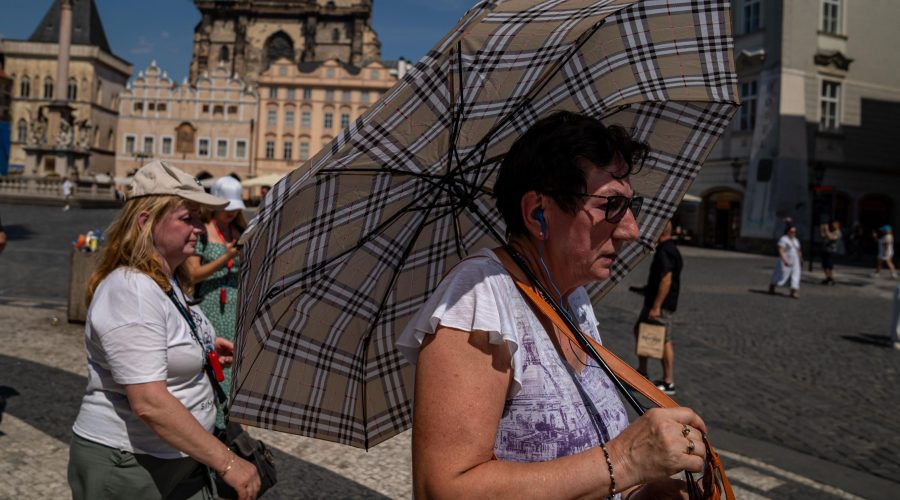
Heatwave breaks records in Germany, Denmark and Czech Republic
Heatwave breaks records in Germany Denmark – Europe continued its streak of intense heat as the Czech Republic, Germany, and Denmark faced record-breaking temperatures, with the unrelenting warmth extending its reach further north and east. The heatwave, now in its third day, has pushed multiple countries to new climatic extremes, disrupting daily life and raising concerns about its long-term effects. Temperatures soared to unprecedented levels, with Germany setting a fresh national high for the second consecutive day, while the Czech Republic and Denmark also saw their own records shattered.
Extreme temperatures and early summer anomalies
Germany’s meteorological service confirmed that the country’s provisional record of 41.5°C was recorded in Möckern-Drewitz, a town in the eastern state of Saxony-Anhalt. This surpassed the previous benchmark of 41.3°C, which had been set just 24 hours earlier in Saarbrucken near the French border. Meanwhile, the Czech Republic recorded its highest-ever temperature at 40.8°C in Doksany, a village north of Prague, according to the national meteorological service (CHMI). In Denmark, a provisional reading of 37°C in Odum, close to Aarhus, broke the 1976 record of 36.4°C, marking a significant shift in summer patterns.
Switzerland, too, experienced a third consecutive day of record-breaking heat, with temperatures in Basel reaching 39°C. This highlights the widespread nature of the event, as the heatwave began over the Iberian Peninsula and has since expanded its influence across the continent. The World Meteorological Organization has warned that such a severe heatwave so early in the summer would have been “virtually impossible” five decades ago, underscoring the accelerating pace of climate change.
Health impacts and public responses
The extreme conditions have had tangible consequences, particularly for vulnerable populations. In France, the number of drowning deaths rose to at least 55, with two-thirds occurring in unsupervised areas. Health officials reported a surge of 1,000 additional deaths during the heatwave compared to the same period last year, with regions under red heat alerts suffering the most. In Berlin, authorities deployed water cannons to spray mist onto crowds, offering a temporary reprieve from the sweltering temperatures. “This heat isn’t pleasant summer weather. It’s a health crisis,” said Katrin Goering-Eckardt, a German politician and former Green Party leader, in a post on X.
The scientific community has linked the heatwave to a persistent high-pressure system, commonly referred to as a “heat dome.” BBC weather presenter Ben Rich explained that this atmospheric phenomenon traps warm air, causing temperatures to rise steadily. “Underneath the high pressure system, sinking air compresses and warms, lifting temperatures day by day,” he noted. The lack of cloud cover further intensified the situation, allowing strong sunlight to heat surfaces more aggressively. Such conditions have been exacerbated by changes in the jet stream, which have shifted weather patterns and contributed to the rapid warming of the Arctic.
Global warming and the heatwave’s magnitude
Scientists from the World Weather Attribution group emphasized that the unprecedented heatwave would have been “unequivocally” impossible without climate change. Europe, already the fastest-warming continent, has seen its average temperatures climb rapidly due to a combination of factors, including Arctic warming and altered jet stream behavior. These shifts have created a feedback loop, making extreme weather events more frequent and severe. The current wave of heat, which began in early June, has already forced officials to issue warnings about its potential to strain healthcare systems and ecosystems.
The situation is expected to persist through the weekend, with temperatures potentially exceeding 40°C in several regions. However, cooler air is forecast to move eastward later in the week, offering some relief. In Spain, the MoMo monitoring system documented 327 heat-related deaths between Sunday and Thursday, illustrating the continent’s collective struggle. These numbers are not just statistics—they reflect real human suffering, as the heatwave has disrupted agriculture, transportation, and even everyday activities like sleeping and working.
Preparing for the heat: Practical advice
As the heatwave lingers, experts are urging people to take proactive steps to stay safe. Simple measures, such as keeping homes cool by closing blinds, using fans, and avoiding prolonged exposure to sunlight, can make a critical difference. Staying hydrated, wearing loose clothing, and checking on elderly neighbors or pets are also essential. In extreme cases, some have questioned whether schools or workplaces should remain open, with debates over the balance between economic productivity and public health.
Despite the challenges, there are signs of resilience and adaptation. Communities in Germany and Denmark have mobilized resources to combat the heat, from deploying water cannons to distributing cooling supplies. Yet, the scale of the event—reaching 150 million people across Europe with temperatures above 35°C—underscores the urgency of addressing climate change. The heatwave is not just a temporary anomaly; it is a harbinger of a warmer future, where such events may become the norm rather than the exception.
For those in the path of the heatwave, the experience has been both alarming and transformative. The Czech Republic’s record-breaking temperature in Doksany and Germany’s consecutive highs in Saxony-Anhalt and Saarbrucken have sparked conversations about the need for better urban planning and climate policies. As the World Meteorological Organization warned, the “major impacts” of the heatwave are likely to be felt for years to come, with ecosystems and human health at risk. The question now is not just how to survive the heat, but how to prepare for the next wave, which may arrive sooner than expected.
The scientific consensus is clear: climate change is driving these extreme weather patterns. With Europe’s temperature records being rewritten daily, the urgency to mitigate greenhouse gas emissions has never been greater. While the immediate focus remains on cooling down and preventing heat-related illnesses, the long-term implications of this heatwave serve as a stark reminder of the planet’s changing climate. The combination of early summer heat, prolonged high-pressure systems, and Arctic warming has created a perfect storm, one that threatens to redefine what is considered “normal” weather in the coming decades.
Conclusion: A warning from the weather
The heatwave’s spread across Germany, Denmark, and the Czech Republic exemplifies the growing intensity of climate-related events. As Ben Rich, a BBC weather forecaster, pointed out, the extreme heat will likely continue into Monday, with some regions remaining at risk. This is a pivotal moment for Europe, as the continent grapples with the reality of a hotter, drier future. The record temperatures, the health toll, and the ecological strain all point to a single, urgent message: the climate is changing, and its effects are here to stay.