
House Democrats condemn Texas candidate for antisemitism and accuse a PAC of boosting her
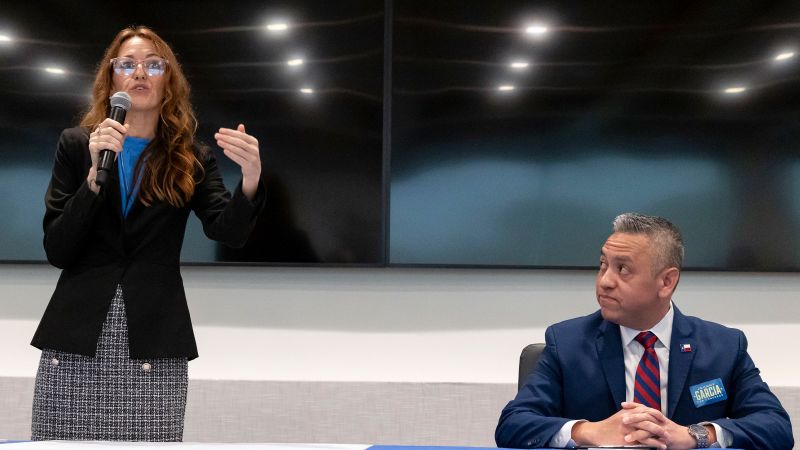
House Democrats Condemn Texas Candidate Over Antisemitism and PAC Allegations
House Democrats condemn Texas candidate for antisemitism, accusing a newly formed PAC of indirectly supporting her campaign. The Democratic Party’s leaders have criticized the group, known as Lead Left, for allocating nearly $428,000 to Galindo’s bid for Texas’s 35th Congressional District. The PAC, registered with the FEC on May 6, has been linked to her recent statements, which have ignited controversy over their potential to fuel ideological divisions. This move has prompted accusations that the PAC is helping amplify a candidate whose views are seen as problematic within the party.
A Controversial Rhetoric
Galindo’s remarks, shared on her Instagram account, have drawn sharp criticism for their antisemitic undertones. She described the Karnes ICE Detention Center as a “prison for American Zionists and former ICE officers for human trafficking,” a statement interpreted as targeting Jewish supporters of Israel. The comments have also connected her to claims that her Republican rival is “controlled by money from Zionists” and that Israel-aligned individuals should face treason charges. These statements have divided political factions, with some calling them a sign of growing ideological hostility within the Democratic Party.
“Her rhetoric is damaging to our party’s credibility and risks alienating key voter groups,” said State Rep. James Talarico, a Democratic Senate nominee. “We must address these comments to maintain unity and prevent them from undermining our platform.”
Talarico, who has distanced himself from Galindo’s campaign, emphasized that the remarks could fracture the party’s coalition. While Galindo remains a strong contender in the race, her comments have reportedly created tension with Democratic leaders. Critics argue that her antisemitic rhetoric weakens the party’s appeal to a diverse electorate, especially as the district becomes more competitive in this year’s elections.
PAC Allegations and Political Backing
The PAC, Lead Left, has become a focal point of the controversy. Democratic officials suggest the group is being used to elevate Galindo’s candidacy despite her earlier rejection by national leadership. The PAC’s strategy involves funding other Democrats deemed less likely to win in the general election, a tactic some see as a Republican influence play. Earlier reports highlighted ties between Lead Left and WinRed, a platform closely associated with Republican fundraising efforts, raising questions about its role in the race.
These connections have led to accusations that Republicans are quietly backing Galindo through the PAC. House Minority Leader Hakeem Jeffries and Democratic Congressional Campaign Committee chair Suzan DelBene stated that “Republican fingerprints are evident” in the PAC’s operations. They noted that its messaging in Nebraska closely mirrors that of a Republican-linked nonprofit, suggesting a coordinated effort to bolster her campaign at the expense of Democratic unity.
“The House Democrats are right to condemn this candidate’s comments, which reflect a dangerous bias against Jewish Americans,” said DelBene. “We must ensure the PAC is not undermining our party’s values through indirect support.”
Redistricting and Electoral Shifts
The 35th Congressional District’s political landscape has changed dramatically since 2025. Texas Republicans redrew the boundaries to create a more competitive seat, historically leaning Republican by 10 points in 2024. This shift has intensified the race, with Galindo’s campaign now at the center of a broader debate about ideological alignment. Democratic leaders argue that her antisemitic remarks could sway voters in this pivotal district, where the outcome may have national implications.
Galindo, however, defends her statements as targeted criticism of individuals, not an attack on Judaism. In an interview with CNN, she clarified that her focus was on “billionaire Zionists” and their alleged role in shaping policies. While she acknowledges the controversy, she claims the Democratic Congressional Campaign Committee has exaggerated her stance to weaken her opponent’s chances. The debate over her comments and the PAC’s role continues as the election approaches.
