Protesters Set DRC Ebola Treatment Center Ablaze Amid Rising Concerns
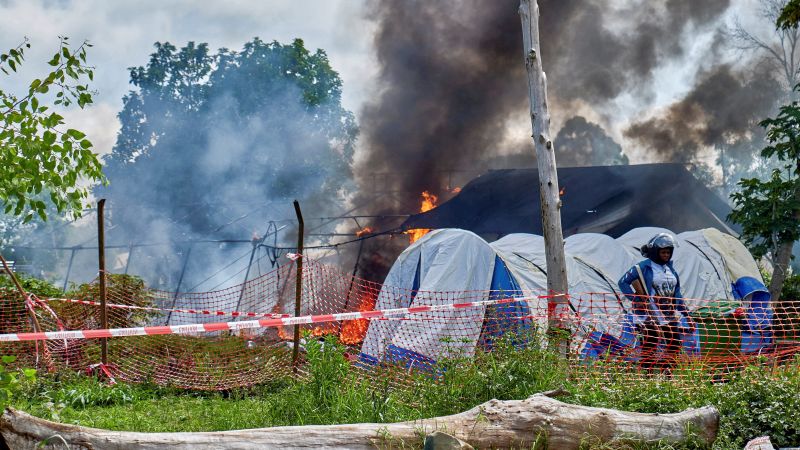
Protesters set Ebola treatment center on fire – On Thursday, a significant incident occurred at a health facility in the eastern Democratic Republic of Congo (DRC) when protesters ignited a fire, resulting in the destruction of two hospital tents. The event was reported by Luc Mambele, vice president of the Congolese political party A2RC, who described the situation as a result of tensions over the handling of a deceased Ebola patient’s body. The unrest unfolded after the family of a young man who succumbed to the disease attempted to retrieve his remains from Rwampara Hospital, Mambele explained. This act of defiance, he noted, led to a confrontation with health authorities, culminating in the burning of the medical tents.
The Bundibugyo strain of Ebola, known for its high fatality rate and lack of targeted treatments or vaccines, has been responsible for the outbreak. The DRC has reported at least 160 deaths linked to the virus, with health officials identifying 13 confirmed cases and 78 suspected ones in Ituri province on the same day. The incident at the hospital highlights the challenges faced by health workers in maintaining trust and control in the region, where misinformation has intensified fear among residents.
A Fire Ignited by Anger and Uncertainty
According to Mambele, the confrontation escalated when family members, denied access to the young man’s body, began throwing projectiles at the hospital tents. This action triggered a fire that spread rapidly through the facility. ALIMA, the medical humanitarian organization operating the tents, confirmed that six patients were receiving care at the time of the attack and are now being treated in the hospital. The group warned that the spread of “incorrect or unconfirmed information” on social media and the internet could exacerbate public fear and erode confidence in health institutions.
“The population is not sufficiently informed or made aware of what is happening. To members of the most remote communities, Ebola is a White man’s invention; it doesn’t exist,” Mambele remarked.
Video footage shared with CNN showed police officers firing warning shots to disperse the protesters, while the aftermath revealed large flames consuming the medical tents. The scorched remnants of the tents and blackened hospital beds became a stark symbol of the community’s distress. Officers from the national police force arrived swiftly to restore order, Mambele added, though the event underscored the fragility of the situation in the region.
The Global Spread of a Lethal Virus
The World Health Organization (WHO) has officially designated the DRC’s Ebola outbreak as a “public health emergency of international concern.” However, the global risk remains relatively low, as the virus has only reached neighboring Uganda. In Kampala, the capital of Uganda, health officials confirmed two laboratory-verified cases, including one fatality. A female patient who tested positive for the virus has since returned two negative results and is “currently out of danger,” according to the Ugandan Health Ministry.
The outbreak’s timeline began with a suspected case involving a healthcare worker in Bunia, whose symptoms emerged on April 24. By May 5, the WHO noted an “unidentified illness” with high mortality rates in the Ituri province. A rapid response team’s investigation on May 13 led to the identification of the Bundibugyo strain on May 15. The Centers for Disease Control and Prevention (CDC) became aware of the outbreak on Thursday, May 14, as per a CDC expert source working on the Ebola response. The first formal meetings about the outbreak were held on Friday, with global attention now focused on containing its spread.
The DRC’s health officials are also tracking over 1,260 individuals who may have come into contact with the virus. The country’s Health Ministry reported 64 officially confirmed cases and 671 suspected cases as of Thursday. This data includes the first suspected case, which was linked to a healthcare worker in Bunia. The virus’s reach extends beyond the DRC, as one American employee working in the region has tested positive for Bundibugyo Ebola and is being treated in Berlin, Germany, the German Health Ministry confirmed on Wednesday.
Community Mistrust and the Path Forward
A spokesperson for the DRC, Patrick Muyaya, condemned the attack, calling it “exactly what they shouldn’t do.” He emphasized the need for swift action to prevent further damage to the health infrastructure. Mambele, however, framed the incident as a consequence of growing misinformation within the community. “Many residents believe that ‘Ebola is a lie,’ and they see it as a tool used by outsiders to manipulate them,” he said.
“The population is not sufficiently informed or made aware of what is happening. To members of the most remote communities, Ebola is a White man’s invention; it doesn’t exist,” Mambele remarked.
This sentiment reflects a broader challenge in combating the disease. Health officials must not only address the immediate threat but also rebuild trust in their institutions. The Bundibugyo strain, which has caused concern due to its rapid spread and lack of a known cure, requires coordinated efforts between local and international bodies. Peter Piot, co-discoverer of the Ebola virus, has highlighted the urgency of ensuring patient care and protecting health workers as the outbreak continues to unfold.
Public transport, including flights and ferries, between Uganda and the DRC has been suspended to curb the virus’s transmission. Enhanced border security patrols are now in place, underscoring the seriousness of the situation. While the DRC and Uganda work to contain the outbreak, the incident at Rwampara Hospital serves as a reminder of the delicate balance between public health measures and community resistance. As the number of cases grows, so too does the need for transparent communication and education to mitigate fear and ensure compliance with health protocols.
Steps Toward Containment
Health authorities are deploying additional resources to monitor the outbreak and provide care. The focus remains on isolating patients, tracing contacts, and distributing information to dispel myths. Mambele stressed that the protest was a symptom of a larger issue: the community’s lack of understanding about the virus. “People are not just reacting to the disease itself; they are reacting to the way it is being managed,” he said.
Despite the chaos, the situation is being handled with a combination of local and international expertise. The WHO has partnered with the DRC to support containment efforts, while the CDC continues to provide updates on the evolving outbreak. The German patient’s case, for instance, demonstrates the global reach of the virus and the need for a unified response. Meanwhile, in Uganda, the two confirmed cases have prompted heightened vigilance, with health officials working to isolate affected individuals and prevent further spread.
The incident at the hospital also highlights the emotional toll of the outbreak on families and communities. The fight for the body of the deceased young man was not just about retrieving a loved one but also about expressing frustration with the disease’s impact. As the DRC and Uganda grapple with the challenge of containing the Bundibugyo strain, the events at Rwampara Hospital stand as a critical moment in the ongoing battle against Ebola. The road ahead requires not only medical intervention but also a commitment to addressing the root causes of mistrust and misinformation within the region.