
What we know about the latest Ebola outbreak after WHO declares global health emergency
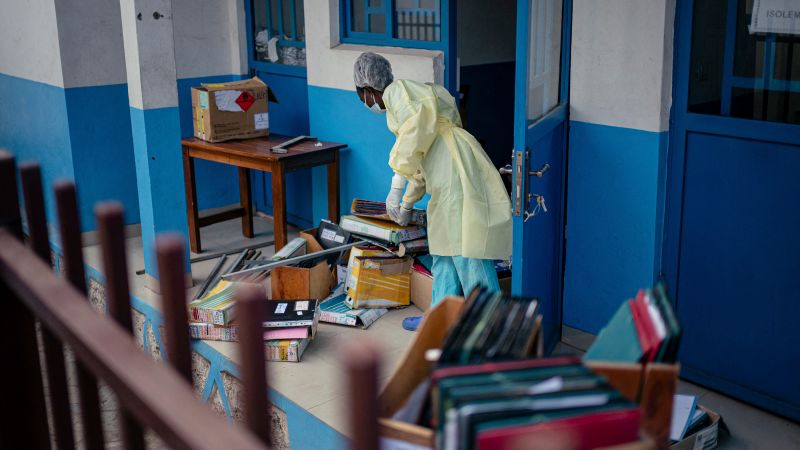
What we know about the latest Ebola outbreak after WHO declares global health emergency
What we know about the latest – On Sunday, the World Health Organization (WHO) classified the ongoing Ebola outbreak in the Democratic Republic of Congo (DRC) and Uganda as a “public health emergency of international concern.” This designation, which marks the highest level of alert under the International Health Regulations, highlights the urgency of the situation as the virus spreads across borders and threatens to escalate further. While the outbreak has not yet reached the threshold of a “pandemic emergency,” experts warn that its trajectory raises significant alarms.
The Role of the Bundibugyo Virus
The current crisis is being fueled by the Bundibugyo virus, a member of the Orthoebolaviruses family that includes several strains capable of causing severe disease. Unlike the more commonly known Ebola virus, the Bundibugyo variant has a slightly lower fatality rate but remains a formidable challenge due to its capacity to spread rapidly in regions with limited healthcare infrastructure. The WHO emphasized that while the outbreak is serious, it does not yet qualify as a pandemic-level crisis.
Cases and Deaths in the DRC
As of Saturday, the DRC’s northeastern Ituri province—a remote region bordering Uganda—reported 246 suspected cases and at least 80 fatalities, according to the United Nations health body. These figures, though still below the pandemic threshold, have sparked concerns about the virus’s ability to be contained. The WHO initially claimed another confirmed case in Kinshasa, the DRC’s capital, but later corrected the information, stating the individual had tested negative for Bundibugyo virus on follow-up analysis.
Meanwhile, in Goma, the eastern DRC city that was recently captured by the Rwanda-backed AFC/M23 rebel coalition, at least one case has been identified. The rebel group confirmed this through its spokesperson, who noted the individual’s connection to the outbreak. In Uganda, two laboratory-confirmed cases, including a death, have been reported in Kampala. Both patients had recently traveled from the DRC, but there is no clear link between them. The Ugandan media office added that a Congolese man’s body, which had died in the capital, was returned to the DRC for burial, while the other individual continues to receive treatment.
Global Response and Fatality Rates
Medical organizations are closely monitoring the outbreak, with Doctors Without Borders (MSF) preparing to enhance its response in Ituri province. Trish Newport, MSF’s emergency program manager, expressed grave concerns about the rapid spread of the disease, stating,
“The number of cases and deaths we are seeing in such a short timeframe, combined with the spread across several health zones and now across the border, is extremely concerning.”
She also highlighted the challenges faced by the local population, noting that many in Ituri already struggle to access basic medical care due to ongoing insecurity and underfunded health systems.
Historically, Ebola fatality rates have varied widely, ranging from 25% to 90% depending on the strain and the availability of medical resources. The WHO noted that the average death rate across all outbreaks is approximately 50%, with the Bundibugyo strain estimated to cause between 25% and 40% mortality. While this is less severe than the Zaire strain, the lack of a specific vaccine for Bundibugyo has raised worries about long-term containment efforts.
This is the third known outbreak linked to the Bundibugyo virus, following earlier cases in Uganda between 2007 and 2008, as well as a 2012 epidemic in the DRC. The current situation, however, is particularly alarming due to its geographic expansion and the increasing number of suspected cases. The DRC has experienced 17 Ebola outbreaks since the first recorded case in 1976, underscoring the country’s vulnerability to the virus.
Transmission and Contagiousness
Unlike airborne diseases, Ebola is not highly contagious through the air. Instead, it spreads through direct contact with the bodily fluids of an infected person, such as blood, saliva, or vomit. Contaminated surfaces or objects can also act as vectors, emphasizing the importance of hygiene and isolation measures. Laboratory studies on nonhuman primates suggest that even a single virus particle can lead to a fatal infection, making the disease particularly dangerous in close quarters.
Health experts have stressed that while the virus is extremely infectious, its transmission depends on close contact rather than widespread community spread. This characteristic has allowed outbreaks to remain localized in the past, but the current scenario shows signs of crossing into new areas. The WHO’s decision to declare a global health emergency reflects the virus’s ability to move beyond its initial containment zone, posing a risk to regional and global health networks.
Implications for Public Health
The classification underscores the need for swift international collaboration to mitigate the spread. The WHO’s assessment included several key factors: the growing number of suspected deaths, the emergence of confirmed cases in both the DRC and Uganda, and the lack of an approved vaccine or treatment for the Bundibugyo strain. These elements combine to create a high-risk environment, especially in regions with limited medical infrastructure.
With 246 suspected cases and 80 deaths reported in the DRC alone, the situation has escalated quickly. The UN health body’s data shows the outbreak is now active in multiple health zones, with the potential to spread further. In Uganda, the confirmation of two cases has drawn attention to the cross-border movement of the virus, raising questions about the effectiveness of existing containment strategies. The Ugandan media office’s statement that a Congolese man’s body was returned to the DRC for burial adds a human element to the crisis, illustrating the personal impact of the disease.
As the outbreak continues to develop, health officials are urging vigilance. The WHO’s initial designation of a global health emergency signals that the situation is serious enough to warrant coordinated action. While the Bundibugyo virus may not be as deadly as others, its persistence and the lack of a targeted vaccine mean that containment efforts must be both robust and timely. The MSF’s warnings about the rapid progression of the disease and the challenges in Ituri province serve as a call to action for governments and health organizations to scale up their responses.
With the virus spreading across borders and the number of cases rising, the international community is now on high alert. The WHO’s decision to elevate the outbreak to a global health emergency reflects the gravity of the situation and the potential for further escalation. As experts work to understand the virus’s behavior and develop new interventions, the focus remains on preventing it from becoming a larger, more widespread threat.
