Anguished Families Struggle to Identify Venezuela Quake Victims at Makeshift Morgue
Tragedy in La Guaira
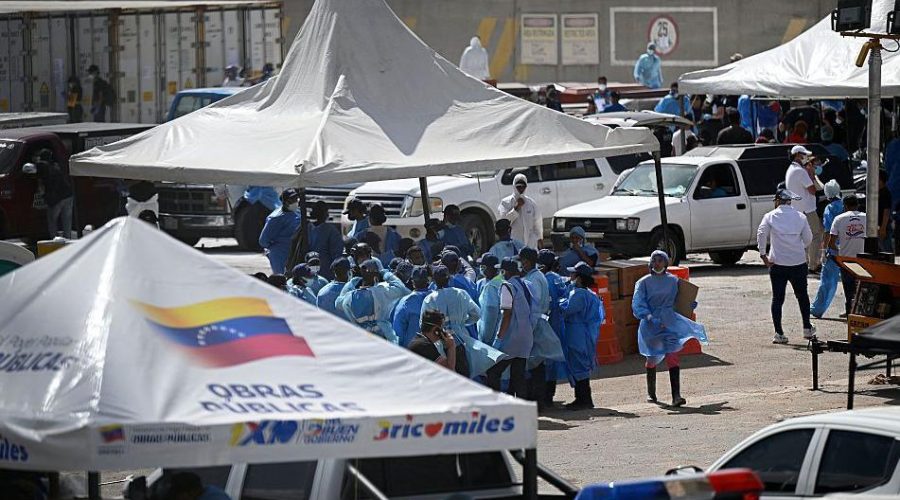
Anguished families left to identify Venezuela – Nearly two weeks after a catastrophic earthquake struck Venezuela, the port city of La Guaira has transformed into a center of mourning. A once-bustling cargo facility now serves as a makeshift morgue, where families endure long waits to confirm the fate of their loved ones. The air is heavy with the smell of decay, and the relentless sun casts a harsh light on rows of bodies wrapped in plastic bags. This bleak scene reflects the immense scale of the disaster, which has claimed over 2,600 lives and left authorities overwhelmed in their efforts to manage the aftermath.
Residents, many of whom have spent days searching hospitals, shelters, and collapsed buildings, now face the daunting task of identifying the dead. The process is both methodical and emotional, as families gather in groups, some clutching photos, others holding onto fragments of personal items. The challenge lies not only in locating bodies but also in distinguishing them in a landscape where nearly everything has been reduced to rubble. For families, this is a desperate quest to find closure in the face of unimaginable loss.
A Desperate Search for Answers
Inside the facility, the atmosphere is thick with sorrow. Families shuffle between rows of chairs, their faces a mix of exhaustion and hope. The heat is stifling, and the sight of bodies stacked under the sun has become a daily reality. For many, the identification process is a way to bring a sense of finality to their grief. Yet, it often feels like a trial that stretches beyond the physical, testing the emotional limits of those who remain.
Medical and forensic teams work side by side, handling remains with care as they piece together identities. Bodies, often wrapped in plastic, are arranged in chronological order of discovery. A tent nearby offers free cremation services, while forensic specialists examine dental records and other clues. This dual effort highlights the urgency of the situation, where technology and tradition converge to uncover the identities of the deceased.
Stories of Resilience and Loss
For some families, the identification process offers fleeting moments of solace. A 60-year-old resident of Catia La Mar, Liliana González, recounts how she found her 37-year-old nephew through a tattoo on his arm. “I saw my mum when she died, but this… this isn’t the same,” she says, her voice trembling as she describes the anguish of recognizing a loved one only through images on a tablet. The screens, showing thousands of bodies in rapid succession, are a haunting reminder of the human cost of the disaster.
“I’m afraid of what I’m going to see in there, but it’s the only way to end this agony,” says a woman who has searched for her nephew for nearly a week. “I’ve looked for him everywhere: in the building, in the hospitals, I’ve spoken to everyone… and no one knows anything.”
The images displayed on the screens become a lifeline for those unable to bear the sight of the dead. Each photo is a story, a clue, or a memory. Families scan for recognizable features—tattoos, bracelets, or even a faded piece of clothing. One woman, who identified her son through a dusty blanket, weeps as she clutches the item to her chest. Her sobs echo the collective grief of the community, a chorus of sorrow that fills the air. Volunteers occasionally pause to offer comfort, though the task feels insurmountable.
The Weight of Uncertainty
Despite the efforts, uncertainty lingers. Modesta Alemán, 56, traveled from Carayaca to search for her older sister, Matilde, who lived in Playa Grande, one of the hardest-hit areas. “They told us there were no survivors,” Modesta says, her voice steady but heavy with disbelief. Though she hoped to see her sister’s body, volunteers later claimed to have heard voices calling from the wreckage, a cruel twist that deepens the emotional toll.
“They didn’t let me go in,” Modesta says. “I think it’s better this way. The process can take hours, and I just want to hold her once.”
Her relatives, fearing the trauma of seeing their sister’s remains, take charge of the identification process. For every family that finds a connection, others stand at the morgue’s