Tartan Army’s World Cup Traffic Cone Chaos Spreads Across Scotland
Tartan Army s World Cup traffic – Scotlands cultural landscape has found itself unexpectedly transformed by a quirky tradition that originated during the recent World Cup festivities. The practice of adorning statues with traffic cones, once confined to Glasgow, has now become a national phenomenon, drawing both amusement and criticism. From Edinburgh to Dumfries, and even to the mythical Nessie in Inverness, the trend has redefined how the nation interacts with its historical landmarks. This phenomenon, humorously dubbed “cone culture,” has sparked debates about its impact on public art and its role as a symbol of fan enthusiasm.
A Century-Old Icon in a Modern Twist
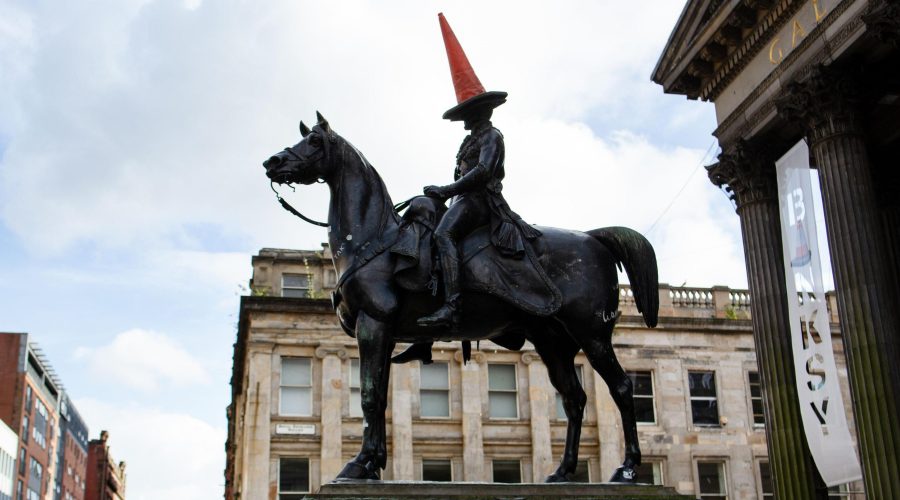
The tradition of placing traffic cones on the Duke of Wellington statue in Glasgow began decades ago, evolving from a local prank into an emblem of Scottish identity. Originally erected in 1844 by Italian sculptor Carlo Marochetti to commemorate Arthur Wellesley’s victory over Napoleon at the Battle of Waterloo, the monument has stood as a proud representation of the city’s history. However, in the 1980s, students returning from lively nights out started adding cones to the statue, turning it into a focal point of the city’s street culture. The phrase “They came. They saw. They coned,” now a popular meme, encapsulates the idea that fans of the Tartan Army have taken this playful gesture to heart.
For over 30 years, Glasgow city council and its residents engaged in a running battle over the cone’s presence. Each time the council removed the cone—often at significant cost—the statue would swiftly be re-equipped, with supporters rallying to defend it. This resilience eventually led to the council conceding, allowing the cone to remain as a symbol of the city’s spirited community. The statue even gained a notable admirer in the form of artist Banksy, who once called it his “favourite” piece of public art. The cultural significance of the cone has grown beyond its original purpose, becoming a shorthand for the vibrancy of Glasgow’s public spaces.
From Glasgow to the Nation: A Fad or a Legacy?
The trend quickly expanded beyond Glasgow, with fans in Edinburgh and other cities adopting the practice. In Edinburgh, the Duke of Wellington statue outside Register House, a historic building in the city center, was spotted wearing an orange cone last week. Similarly, monuments to David Hume and Adam Smith on the Royal Mile received the same treatment, sparking curiosity about why these figures were chosen. The Robert Burns statue in Dumfries, for instance, was given a new headpiece to shield it from the summer heat, while Nessie, the Loch Ness Monster, now sports cones in the middle of a roundabout in Inverness. Even Aberdeen’s Union Street saw a statue receive the cone treatment, highlighting the widespread nature of the craze.
These acts of “coronation” by fans have taken on a dual meaning: both a tribute to the team’s passion and a commentary on the relationship between communities and their monuments. In Boston, the Tartan Army’s arrival during the World Cup led to the statue of the Duke of Wellington being coneless, prompting locals to embrace the gesture. A proposed twinning agreement between Boston and Glasgow was marked by a symbolic exchange—a signed cone from Glasgow was gifted to Boston, celebrating its role in the American Revolution. This gesture underscored how the tradition has become a way for fans to connect with cities through shared cultural experiences.
Commercialization and Public Reaction
As the trend gained traction, it began to intersect with commercial interests. The iconic cone image has now become a lucrative brand, with items such as tote bags and T-shirts featuring the Duke of Wellington in cone form. At the TRNSMT festival on Glasgow Green, attendees were seen wearing felt cone hats, while visitors to the Glasgow Gallery of Modern Art can purchase a £15 tote bag or a £20 T-shirt. However, the commercialization has not gone without controversy. Alistair Heather, a historian and tour guide, noted that the image’s original meaning—rooted in grassroots rebellion against authority—has been diluted by corporate ventures. “It started off in a proper ‘us v them’ tit for tat thing between the people and the council,” Heather said. “Where I think it got really brutally unfunny was once the Commonwealth Games in 2014. It got gentrified.”
While some view the cones as a fun and creative expression of fandom, others argue that the practice undermines the dignity of historical figures. Edinburgh city centre councillor Jo Mowatt expressed concern about the trend’s spread to her city. “I think I would much rather it stayed the other side of the M8,” she said in a BBC Radio Scotland interview. “I wouldn’t tell Glasgow what they should and shouldn’t do, that’s up to them, but in the middle of where it’s happening, in Edinburgh, it’s just totally inappropriate.” Her comments reflect a growing divide between those who see the cones as a celebration of community spirit and those who believe they represent an over-the-top, superficial trend.
The Evolution of a Symbol
What began as a local joke has now evolved into a broader cultural movement. The cones, once a simple act of defiance against council regulations, have taken on new life as a visual shorthand for Scottish pride. This shift is evident in the way the tradition has spread to cities like Inverness, where Nessie’s new headwear has become a talking point. The practice has also reached the countryside, with fans in Stenhousemuir contributing their own examples of coned statues. These acts, while humorous, have sparked discussions about the role of public art in modern society and whether such gestures can coexist with historical preservation.
With the World Cup now in the rearview, the question remains: is this trend a fleeting celebration of the tournament, or has it become a permanent fixture of Scottish culture? The answer may lie in the continued enthusiasm of fans and the adaptability of the tradition. For instance, the Commonwealth Games in Glasgow this summer will feature Finnie, a unicorn mascot with a cone on its head, further embedding the image into the nation’s collective consciousness. Meanwhile, the tartan cone hats worn by festival-goers and the commercial products available for purchase suggest that the practice has found a place in both everyday life and the marketplace.
The spread of this trend also raises questions about its origins. While the Glasgow statue has been the most prominent example, the practice in Boston highlights how the tradition has been adopted and reinterpreted across different regions. The city’s coneless statue of the Duke of Wellington, once a point of contention, has become a symbol of unity between the two cities. This exchange, however, has also revealed the potential for the trend to evolve into something more than a temporary display of fan energy. As statues across Scotland continue to receive their cone crowns, the tradition may prove to be as enduring as the historical figures it now adorns.
Ultimately, the traffic cone craze reflects the dynamic interplay between tradition and modernity. While some may argue that the practice trivializes public art, others see it as a refreshing way to engage with history in a lighthearted manner. The continued popularity of the cones, both in physical form and as merchandise, suggests that they have transcended their initial role as a local joke. Whether this trend will fade with the World Cup or persist as a unique cultural statement remains to be seen. For now, though, the Tartan Army’s traffic cone antics are a testament to the creative spirit of Scottish fans and their ability to transform historical symbols into something entirely new.