Can China Repeat Its EV Success With Robotaxis?
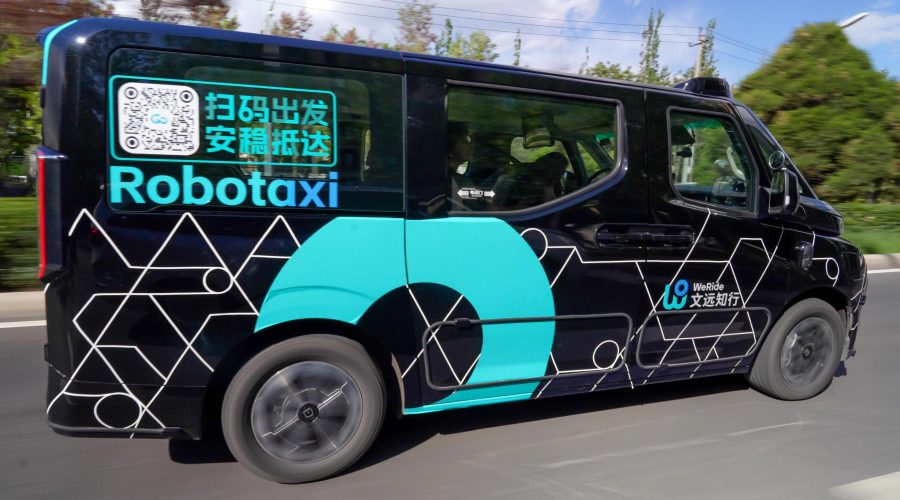
Can China repeat its EV success – In the heart of Beijing’s Yizhuang district, a new kind of mobility is taking shape. Unmanned vehicles now glide through streets alongside traditional cars, while self-driving delivery vans move silently along inner lanes, ferrying goods to designated hubs. This urban landscape has become a proving ground for autonomous driving, where companies such as Baidu, WeRide, and Pony.ai operate commercial robotaxi services in controlled zones. The shift is not just technological—it’s cultural, signaling a broader transformation in how transportation is conceived and executed.
The Ecosystem Behind China’s Autonomous Driving Surge
China’s dominance in the electric vehicle (EV) sector has created a ripple effect in its approach to robotics. The country’s established EV infrastructure, including vast battery production and advanced sensor manufacturing, serves as a foundation for autonomous technology. Unlike Tesla, which develops much of its hardware in-house, China’s self-driving industry is woven into a collaborative network of automakers and software specialists. Firms like BYD, Chery, Geely, and SAIC focus on vehicle production, while companies such as Pony.ai and WeRide refine the algorithms that power autonomous systems.
This integration allows for rapid innovation. Autonomous vehicles share components with EVs—such as lithium-ion batteries, cameras, and onboard computers—meaning the supply chains are already in place. As a result, Chinese companies can scale production faster and at lower costs. “What you see is a pace of innovation and adaptation in the Chinese EV industry that I don’t think is matched anywhere else around the world,” explains Kyle Chan, a foreign policy fellow at the Brookings Institution. “China’s EV capacity doesn’t just stop there. It actually spills over into other related industries through these overlapping tech industrial ecosystems.”
Complex Conditions as a Catalyst for Data Growth
While the technology is still evolving, the diversity of China’s roadways presents unique challenges. Maeve Zhang, chief marketing officer at WeRide, notes that a single trip through Beijing involves navigating buses, scooters, cyclists, and pedestrians. “The traffic environment here in China is very complex,” she says. This complexity generates a wealth of data, which is critical for training autonomous systems to handle unpredictable scenarios. The same data streams that power EVs are now feeding into robotaxis, accelerating their development.
However, the same conditions that make China a testing ground for autonomous driving also highlight potential hurdles in global expansion. Extreme climates, for instance, can disrupt the performance of batteries and sensors. In the Middle East, scorching temperatures may degrade lithium batteries, while heavy rainfall in Southeast Asia could blur the cameras that guide self-driving cars. Even in colder regions like Switzerland, snow and fog pose risks to the reliability of autonomous systems. “In the Middle East, the temperature is very high. In South East Asia, there is heavy rain… and in Switzerland, winter temperatures can be very, very low,” Zhang adds. These factors underscore the need for localized adaptations when deploying robotaxis overseas.
Global Expansion and Strategic Partnerships
Despite these challenges, Chinese companies are rapidly scaling their ambitions beyond domestic borders. Robotaxis are just one component of this strategy; firms like QCraft are applying their autonomous software to passenger cars, buses, and delivery vehicles. The company claims its buses are already in operation across more than 20 Chinese cities, with plans to expand internationally. “It’s very promising on the technology side that maybe the next five, seven, at most 10 years, it will get into everybody’s life,” says James Yu, the company’s chairman and chief executive.
Strategic alliances are also playing a key role. Companies such as Uber and Lyft, which have faced setbacks in their autonomous ventures, are now partnering with Chinese firms. Uber’s 2018 accident involving a self-driving vehicle, which claimed a pedestrian’s life, led to a reevaluation of its strategy. Tu Le, founder of consultancy Sino Auto Insights, points out that these partnerships offer access to a massive customer base. “Through these partnerships, they’re able to commercialise and broaden their scope,” he says. “It gives them automatic access to millions of customers that they wouldn’t have if they created their own app.”
Meanwhile, the US remains a formidable competitor. Waymo, Alphabet’s autonomous driving division, continues to lead in paid services, operating in several major cities. Amazon-owned Zoox and Tesla, though, are taking a more measured approach. Their progress is slower compared to the aggressive pace of Chinese firms, which are leveraging their domestic ecosystem to gain a foothold in global markets. This dynamic raises questions about whether the same success that propelled China to the forefront of the EV industry can be replicated in robotaxis.
The Road Ahead: Challenges and Opportunities
As the industry matures, the focus shifts to overcoming logistical and environmental barriers. While China’s cities offer ideal conditions for testing, the real challenge lies in adapting to foreign environments. For example, urban areas in the US have different traffic patterns, and rural regions may lack the infrastructure required for seamless autonomous operation. Additionally, regulatory frameworks vary widely, requiring Chinese firms to tailor their strategies to each market.
Yet, the potential rewards are significant. With over 100 million EVs on the road, China has already demonstrated its ability to mass-produce and distribute cutting-edge technology. If robotaxis follow a similar trajectory, they could revolutionize urban transport, reducing reliance on human drivers and optimizing efficiency. The question remains: can Chinese companies sustain this momentum while addressing the complexities of international markets?
Industry experts remain cautiously optimistic. The availability of data, the speed of innovation, and the collaborative nature of China’s tech sector give it an edge. However, the success of robotaxis will depend on more than just technology—it will require a seamless blend of infrastructure, policy support, and consumer trust. As the world watches, China’s journey in robotaxis could mirror its EV triumph, or it could reveal new hurdles in the path of autonomous transportation.
Ultimately, the integration of autonomous systems with EVs represents a convergence of industries that has no parallel. The same supply chains that once fueled China’s dominance in the automotive sector are now being repurposed to power the next frontier of mobility. Whether this will translate into global leadership remains to be seen, but the groundwork is already being laid in the bustling streets of Beijing’s Yizhuang district.
With the technology evolving rapidly and the ecosystem growing stronger, the future of robotaxis in China appears bright. However, the road to global domination is paved with challenges. As firms like WeRide and Pony.ai refine their systems, the key will be whether they can navigate the complexities of international markets while maintaining the efficiency that has defined their domestic success.