Ex-Syrian Intelligence Chief Convicted of Torture and Sexual Abuse in Austrian Court
A Rare European Jurisdiction Case Against Assad’s Regime Agents
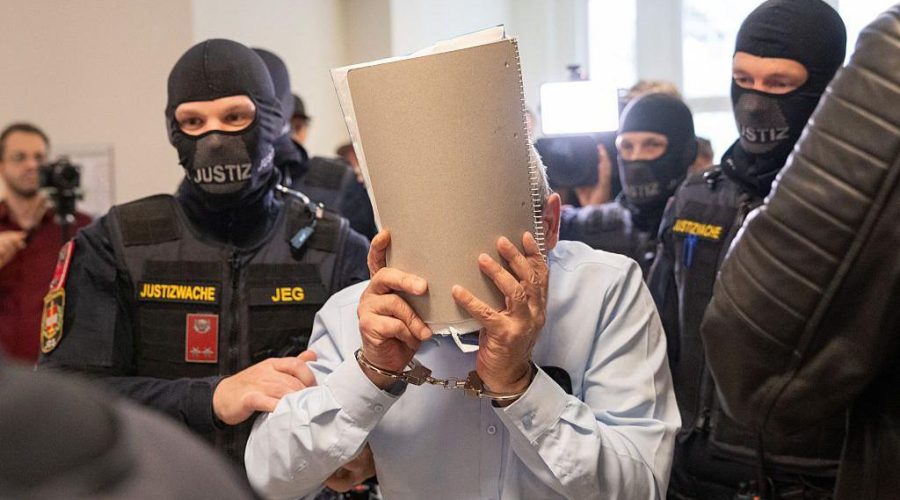
Ex Syrian intelligence chief found guilty – In a landmark ruling, an Austrian court has convicted a former Syrian intelligence chief for acts of torture and sexual abuse committed against opponents of President Bashar al-Assad. The case, which unfolded in Vienna, highlights how European nations are increasingly taking legal action against crimes linked to the Syrian government. The defendant, identified only as Khaled al-H. due to privacy protections, was the head of Syria’s General Intelligence Directorate in Raqqa from 2011 to 2013. His tenure coincided with the early stages of the uprising against Assad, a period marked by intense crackdowns on dissent.
A second Syrian official, Moussab Abou R., former police chief in Raqqa, also faced conviction for similar charges. Both men were found guilty of coercing political opponents and inflicting severe physical harm. The Austrian court’s decision marks a notable instance of European legal systems extending their authority to crimes committed by Assad’s agents, a move that has sparked debate about international accountability.
The trial revealed how the two men systematically abused detainees in Raqqa. Prosecutors argued that the torture was designed to “suppress the protest movement against the regime at the time and to intimidate the population.” Victims, including former prisoners from across Europe and Syria, testified about the brutal methods used, such as being stripped naked, subjected to electric shocks, and doused in alternating hot and cold water. One witness described being beaten with cables on his feet, a detail that underscored the psychological toll of the abuse.
“The torture was carried out to ensure compliance and instill fear among the public,” said prosecutors during the trial, emphasizing the systematic nature of the crimes.
Khaled al-H., a member of the Druze minority group, claimed he had not ordered the torture and had not personally witnessed it. He testified that as part of a minority community, he felt compelled to follow instructions from superiors. Moussab Abou R. echoed similar defenses, stating he had been pressured to participate in the abuses. Despite their denials, both were sentenced to eight years in prison for their roles in the crimes.
The case gained traction after the two men sought asylum in Austria in 2015. According to media reports, Khaled al-H. was intercepted by Austrian authorities through a collaboration with the country’s former domestic intelligence service, BVT. The operation, dubbed “Operation White Milk,” was reportedly organized by Israel’s Mossad. The BVT’s former head, Martin Weiss, oversaw the agreement, which enabled the Syrians to be brought to trial in Vienna. Weiss, now on the run in Dubai, is linked to the fugitive Austrian spy Jan Marsalek, believed to be hiding in Moscow.
The trial also brought attention to the long-term effects of the abuse on survivors. Witnesses described enduring mental trauma, including anxiety, depression, and post-traumatic stress, following their ordeal. These accounts, combined with physical evidence, convinced the court of the officials’ guilt. However, the verdicts are not final. Both men have the right to appeal, a process that could potentially overturn their sentences or reduce the charges.
The case in Vienna is part of a broader effort by European countries to hold Syrian officials accountable for human rights violations. While other nations have pursued similar actions, Austria’s role stands out due to the involvement of the BVT and Mossad. This collaboration underscores the complex web of international intelligence networks working to expose Assad’s regime. The conviction also signals a shift in how European courts view crimes committed abroad, particularly those involving systematic oppression.
As the trial concludes, its implications extend beyond the two men. It may serve as a precedent for future cases against Syrian officials, encouraging more victims to come forward. The Austrian Press Agency noted that the case demonstrates the country’s commitment to justice, even in the face of geopolitical challenges. Meanwhile, the broader Syrian conflict continues, with the state media recently reporting a bomb blast at a Damascus café that killed nine people. This incident, occurring in the aftermath of the court’s decision, highlights the ongoing instability in the region.
The Austrian court’s ruling also coincides with the announcement of the final 70 lawmakers for a new post-Assad parliament. This development raises questions about the political future of Syria and whether justice for the victims of its past actions will be prioritized. For now, the convictions of Khaled al-H. and Moussab Abou R. represent a significant step in holding those responsible for atrocities accountable, even if the path to final judgment remains uncertain.