US and Iran Exchange Strikes, Accuse Each Other of Ceasefire Breach
US and Iran exchange strikes and accuse – Following a drone attack on a Panama-flagged vessel in the Strait of Hormuz, the United States launched fresh military operations against Iran, targeting multiple locations across the country. According to US Central Command (Centcom), these strikes were a direct response to what it described as “continued aggression” targeting commercial shipping. The attack on the tanker MT Kiku served as the immediate catalyst for the US military action, with Centcom emphasizing that Iran had been given a chance to uphold the ceasefire but chose to ignore it.
“Iran was given a chance to honor the ceasefire agreement but elected not to when its forces launched a one-way attack drone that hit MT Kiku,” stated Centcom in a formal release.
In retaliation, Iran’s Islamic Revolutionary Guard Corps (IRGC) claimed it had launched ballistic missiles and drones at US infrastructure in Kuwait and Bahrain, as reported by state media. The IRGC’s statement accused the United States of initiating hostilities under the guise of defending commercial vessels, suggesting that the attacks were justified as a response to prior aggression. The targets included the Ali al-Salem base in Kuwait and the Fifth Naval Fleet in Port Salman, Bahrain, with the IRGC asserting that the infrastructure was “destroyed” in the process.
“Any potential enemy aggression, under any pretext, even if the aggressions are against minor targets, as happened last night and tonight, will have a crushing response,” declared the IRGC in its official statement.
The exchange of fire has intensified the geopolitical standoff between the two nations. US officials confirmed that the strikes caused no casualties or significant damage to American facilities in the Middle East, adding that the operation was carefully targeted to minimize impact. However, the IRGC maintained that its actions were necessary to counter what it viewed as an unjustified escalation by the US.
Strategic Tensions in the Strait of Hormuz
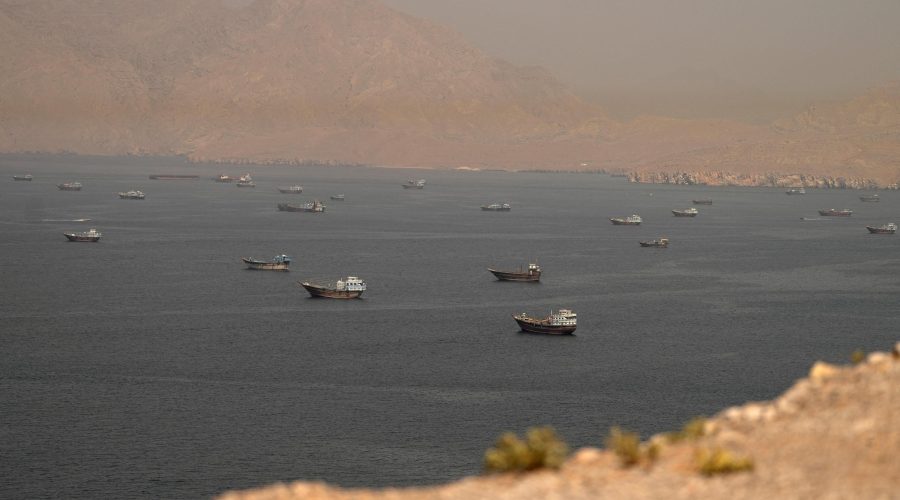
The Strait of Hormuz, a critical chokepoint for global oil and gas shipments, remains at the center of the conflict. Centcom highlighted that commercial vessels continue to operate through the waterway, underscoring its importance to international trade. The US, however, framed the strikes as a necessary measure to protect maritime security, accusing Iran of violating the ceasefire by attacking the Panama-flagged tanker. Iran, in turn, argued that the US had breached the agreement by targeting its military assets in the region, citing the Memorandum of Understanding (MoU) signed on June 17 as the basis for its claims.
“The US has attacked five coastal posts in Iran under the pretext of the IRGC Navy confronting the offending ship,” stated the IRGC, challenging the justification for the strikes.
The MoU had stipulated that Iran would use its “best efforts for the safe passage of commercial vessels” for 60 days without charges. Iran’s Foreign Ministry condemned the US actions as “brutal attacks,” accusing the American regime of failing to honor its commitments. “Breaking promises is part of its nature,” the ministry added, warning that the breach could halt progress in the ceasefire negotiations.
Retaliatory Measures and Escalation
Less than a day before the latest strikes, the US had already targeted Iran in response to an earlier drone attack on a Singapore-flagged cargo ship, MV Ever Lovely, on June 25. Centcom described this earlier retaliation as “a powerful response” to Iran’s aggression, while Tehran claimed the attack was due to the ship’s use of an unauthorized route through Gulf waters. The IRGC responded by launching more strikes against American-linked targets, framing the US as the aggressor in the current crisis.
“If that happens, the Islamic Republic of Iran will no longer exist!” Trump wrote on Truth Social, expressing his belief that Tehran would not learn from the recent conflict.
The situation has drawn strong reactions from both sides. The Iranian Foreign Ministry reiterated its stance, labeling the US actions as a violation of the ceasefire and accusing Washington of treating the agreement as a mere formality. Meanwhile, the US has maintained that Iran’s attacks on commercial vessels, including the Panama-flagged tanker, are the primary cause of the current escalation. This back-and-forth has raised concerns about the stability of the ceasefire and the potential for further military confrontations.
Regional Responses and Security Measures
In the hours following the US strikes, Kuwait and Bahrain reported that their air defense systems had been activated. The Kuwaiti Armed Forces stated, “Kuwaiti air defenses are currently confronting hostile missile and drone attacks,” urging the public to follow security protocols. Bahrain’s Ministry of Interior similarly called on citizens to “remain calm and head to the nearest safe place,” as the nation prepared for potential threats.
The Strait of Hormuz, a vital artery for global energy trade, has seen increased military activity in recent weeks. The US and Iran’s mutual accusations of ceasefire violations have added to the uncertainty, with both sides vying for the upper hand in the region. The US has emphasized its commitment to protecting commercial shipping, while Iran has vowed to take more aggressive measures against American targets, citing the MoU as a framework for its actions.
Historical Context and Future Implications
The 14-point MoU, signed on June 17, aimed to reduce tensions between the US and Iran by establishing a framework for mutual respect in the region. However, the latest strikes have tested the agreement’s durability. Centcom reiterated that Iran’s attacks on commercial vessels were a clear violation of the ceasefire, while the IRGC argued that the US had overstepped by targeting its infrastructure. This disagreement highlights the fragility of the truce and the potential for renewed hostilities.
As the conflict unfolds, the strategic importance of the Strait of Hormuz cannot be overstated. With oil tankers routinely passing through the waterway, any disruption to its security has far-reaching consequences for global markets. The recent strikes and retaliations have raised fears of a broader escalation, particularly given Trump’s remarks on Truth Social, which suggested a willingness to pursue a more decisive military strategy. Analysts warn that the situation could spiral into a full-scale confrontation, jeopardizing the fragile ceasefire and regional stability.
Despite the tensions, Centcom remains optimistic about the continued operation of commercial vessels in the Strait of Hormuz. However, the IRGC’s assertion that it will respond more forcefully to future violations of the waterway could signal a shift in the balance of power. The exchange of strikes has not only heightened military readiness in the Gulf but also underscored the deepening rift between the two nations. As both sides continue to accuse each other of undermining the ceasefire, the question remains: how long can the agreement hold before it is broken entirely?