
US Justice Department working to indict former Cuban president Raúl Castro
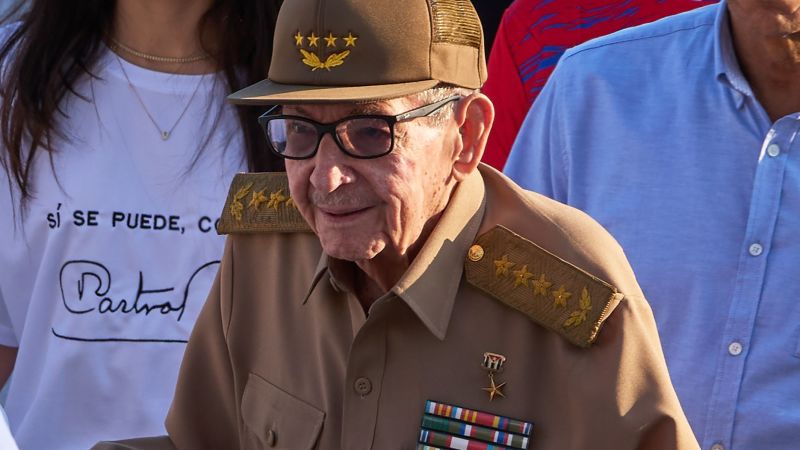
US Justice Department Moves to Indict Former Cuban President Raúl Castro
US Justice Department working to indict – U.S. federal authorities are actively pursuing legal action against former Cuban leader Raúl Castro, according to individuals with knowledge of the ongoing inquiry. While the specifics of the case remain under wraps, prosecutors have explored several potential charges, including those tied to the Cuban military’s 1996 interception of two aircraft operated by the Brothers to the Rescue, a prominent Cuban-American exile group. The incident resulted in the deaths of four individuals, three of whom were U.S. citizens, and has now resurfaced as a focal point for the current investigation. If approved by a grand jury, formal charges could be unveiled as early as next week, marking a pivotal moment in the long-standing political rivalry between the United States and Cuba.
Building a Case Against Cuban Leadership
Efforts to mount a criminal case against Cuban officials have intensified in recent months, with the U.S. Attorney’s Office in Florida’s Southern District playing a central role. The initiative was spearheaded by U.S. Attorney Jason Reding Quiñones, though some seasoned prosecutors in the Miami office expressed reservations about the sufficiency of evidence to justify the charges. According to a source briefed on the proceedings, Castro, the 94-year-old brother of former Cuban leader Fidel Castro, has emerged as a primary suspect in the inquiry. The focus on Castro highlights the growing international scrutiny of his tenure, which ended in 2021.
The case hinges on a critical piece of evidence: a radio transmission recorded during the 1996 incident, which allegedly shows Castro, then serving as Cuba’s defense minister, giving orders to down the planes in international airspace. Cuban-American Republican lawmakers have been vocal in their support for the prosecution, urging the Justice Department to act. In a February letter to then-Attorney General Pam Bondi, representatives such as Rep. Mario Diaz-Balart highlighted the recording as a key justification for legal action, emphasizing its significance in linking Castro to the attack.
Rising Tensions Between the U.S. and Cuba
The potential indictment comes amid escalating tensions between the U.S. and Cuba, two Cold War adversaries locked in a decades-old standoff. The U.S. has accused Havana of fostering an “extraordinary threat” through its alliances with hostile nations and the presence of foreign military and intelligence operations on Cuban soil. Cuba has consistently denied these claims, maintaining that its actions are defensive and aligned with regional stability. The dispute has taken a new turn with the recent visit of CIA Director John Ratcliffe to Cuba, where officials reportedly emphasized that the island nation poses no threat to American security and deserves to be removed from the list of State Sponsors of Terrorism, a designation it has held since the Trump administration.
Cuba’s position is further complicated by the U.S. economic embargo, which has been a central tool in pressuring the nation for years. Under the Trump administration, the sanctions were ramped up, leading to severe economic consequences. In early January, the U.S. severed ties with Venezuela, Cuba’s primary oil supplier, after capturing its president during a military operation and forcing the country to halt oil deliveries. This move triggered threats of tariffs on other nations that continued to supply oil to Cuba, intensifying the economic strain. The impact has been profound, with the Caribbean nation facing its worst economic crisis in decades and the United Nations issuing warnings about the risk of a humanitarian “collapse.”
Political Context and Historical Significance
The current push for charges against Castro is not only a legal maneuver but also a political statement. The former president, who succeeded Fidel Castro in 2006, has been a symbol of Cuban resilience and leadership, yet his role in the 1996 incident has drawn renewed criticism. The timing of the investigation coincides with broader efforts to reframe Cuba’s image in international affairs, with the U.S. leveraging legal and economic tools to assert influence. President Donald Trump, who has previously praised the embargo, recently reiterated his support for continued pressure, stating on social media that “we are going to talk!!!” His comments reflect a strategy that blends hardline measures with the promise of dialogue.
Trump’s remarks, made during a visit to Washington, also hinted at the possibility of a “friendly takeover” of Cuba, a phrase that underscores the administration’s dual approach of coercion and engagement. “We could very well end up having a friendly takeover of Cuba. After many, many years,” he told reporters, adding that he has been familiar with the country since childhood. This sentiment aligns with the Justice Department’s focus on Castro, whose leadership has been scrutinized for its role in both Cuba’s internal affairs and its interactions with the U.S. The case may serve as a catalyst for shifting the dynamics of U.S.-Cuban relations, particularly as Havana seeks to demonstrate its autonomy from past political influences.
Public Statements and Legal Process
Acting Attorney General Todd Blanche addressed the matter on Fox News, emphasizing that no public details of the indictment had been disclosed. “There’s absolutely no public information around any indictment that’s been leaked or discussed on various news outlets, and I assure you, and I assure the American people, that if and when there’s a time to talk about that, we will, obviously,” he stated. This reassurance aims to quell speculation while maintaining the integrity of the legal process. The grand jury’s approval is a crucial step, as it will determine whether the charges proceed to trial and how they are framed.
The Cuban government, meanwhile, has maintained its stance, asserting that the U.S. has no legitimate grounds to accuse it of being a threat. During Ratcliffe’s visit, Havana officials reiterated their position that the embargo and designation as a State Sponsor of Terrorism are unjust. This dialogue reflects a broader attempt to counter the U.S. narrative, even as the Justice Department advances its case against Castro. The case’s outcome could have significant implications for the future of U.S.-Cuban relations, potentially shaping the terms of any upcoming negotiations or agreements.
“We’ve had a lot of years of dealing with Cuba. I’ve been hearing about Cuba since I’m a little boy.”
— President Donald Trump, Washington, D.C.
The investigation into Castro’s actions is part of a larger effort to hold Cuban leaders accountable for past decisions, even as the country navigates economic hardship and political uncertainty. With the potential for legal action to reshape the narrative of U.S.-Cuba relations, the focus remains on whether the evidence presented will be enough to justify a historic indictment. As the process unfolds, both nations will be watching closely, with the outcome likely to influence their diplomatic and strategic interactions for years to come.
CNN’s Paula Reid and Casey Gannon contributed to this report. This story was updated to include additional information.
