
You can now legally request revenge and deepfake porn to be taken down. Here’s how
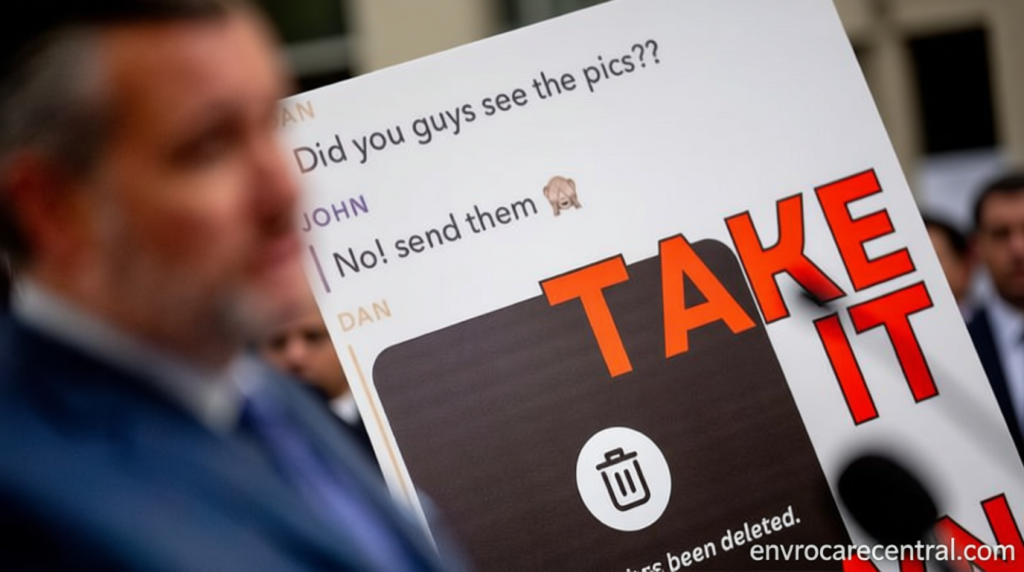
You can now legally request revenge and deepfake porn to be taken down. Here’s how
You can now legally request revenge – The Take It Down Act, a federal law targeting the spread of non-consensual intimate imagery, has officially taken effect, imposing a strict 48-hour deadline for online platforms to remove such content upon user reports. This legislation, signed into law by President Donald Trump last year, criminalizes the publication of intimate visual depictions shared without consent, whether authentic or artificially generated. The new provisions mark a pivotal shift in how digital content is managed, ensuring that companies must act swiftly to address reports of revenge porn and deepfake videos. With the one-year compliance window now closed, the law’s full impact begins to unfold across major tech services.
The Legal Framework and Enforcement
Under the Take It Down Act, platforms that host user-generated content or frequently display intimate material without consent are now legally obligated to respond to removal requests within two days. Failure to meet this requirement could lead to civil fines of $53,088 for each violation, as outlined by the Federal Trade Commission (FTC), which will oversee the law’s implementation. The FTC has already begun reaching out to tech companies, sending compliance alerts to ensure they understand the new standards. These alerts target a range of platforms, from social media giants like Meta, Snapchat, and X to gaming sites, dating apps such as Bumble and Match Group, and even image-sharing services like Pinterest and Reddit.
“Tech companies can no longer ignore the devastating effects of non-consensual intimate imagery on social media,” stated Democratic Senator Amy Klobuchar of Minnesota, who collaborated with Republican Senator Ted Cruz of Texas to draft the bill. “This law ensures victims have a clear and effective pathway to reclaim their privacy.”
The law’s scope extends beyond traditional social media. It applies to any business that regularly hosts or promotes content shared without consent, including platforms like Amazon, Alphabet, and Microsoft. The FTC has clarified that even retailers such as Walmart must comply, as users can upload images for sale on their platforms. This broad definition underscores the law’s intent to hold all entities accountable for enabling the spread of harmful content.
User Reporting Process and Platform Obligations
Victims of non-consensual intimate imagery now have standardized tools to report violations. Platforms are required to simplify the process, allowing users to submit removal requests with minimal effort. For example, Instagram users can report an image by tapping the three dots in the upper-right corner and selecting the “Report” option. A notice at the bottom of the report page provides a direct link for detailed submissions. Similarly, TikTok users can report posts via the arrow button on the lower-right side, with a specific category under “Sexual content” for non-consensual imagery.
The law also mandates that platforms identify and remove duplicates of reported content within the 48-hour window. This includes not only real photos and videos but also artificially generated ones, such as deepfake pornography. The FTC emphasized that platforms must ensure their systems can detect and eliminate all instances of the same content, regardless of format. This provision aims to prevent the proliferation of intimate images across multiple platforms, reducing the harm caused by persistent exposure.
Support for Victims and Deepfake Coverage
While the law sets clear guidelines for platforms, it also offers resources for victims. Organizations like the National Center for Missing & Exploited Children provide a streamlined service for removing images of minors, allowing users to report nude or sexually explicit content with a single click. For adults, the Stop Non-Consensual Intimate Imagery initiative offers assistance, enabling individuals to submit their images for review by participating platforms. Once uploaded, these images are converted into digital hashes, which act as unique identifiers to match and remove duplicates efficiently.
Deepfake pornography, a growing concern in the digital age, is explicitly included in the law’s coverage. This means that even images created using artificial intelligence—such as those manipulated to depict someone in a sexual act without their consent—are subject to the same 48-hour removal rule. The FTC’s statement highlights that the law’s provisions are designed to combat both real and synthetic forms of intimate content, reflecting the increasing role of AI in content creation.
Implications for Tech Companies and Users
With the law’s enforcement now active, tech companies face heightened responsibility in managing user content. The Take It Down Act represents the first federal legislation specifically targeting non-consensual intimate imagery, filling a gap that previously left victims reliant on fragmented state laws and copyright mechanisms. Before this law, removing such content often required complex negotiations or legal action, leaving many without effective recourse. The new framework provides a centralized and consistent approach, empowering users to act quickly and decisively.
The law’s provisions also introduce a new layer of accountability for platforms. The FTC has launched a dedicated website, TakeItDown.ftc.gov, where users can report violations or file complaints about platforms that hinder the removal process. This tool aims to streamline oversight and ensure that companies cannot delay or ignore removal requests. For victims, the law’s impact is significant, as it establishes a clear legal mechanism to address the harm caused by intimate content shared without their consent.
Sen. Ted Cruz, who co-sponsored the bill, praised the law’s effectiveness in holding technology companies to account. “As AI advances, it’s crucial that technology be used responsibly, not as a weapon for abuse, harassment, or exploitation,” he said in a statement. “This law ensures victims have the tools to protect themselves and reclaim their dignity.”
The Take It Down Act’s implementation marks a turning point in digital privacy rights. By enforcing a two-day removal timeline, it pressures platforms to prioritize user safety over content retention. This legal deadline not only addresses immediate harm but also sets a precedent for future regulations in an era where AI-generated content can spread rapidly. As the law takes effect, its success will depend on how well platforms adapt to the new requirements and how effectively users can leverage the reporting mechanisms available to them.
Victims of non-consensual intimate imagery now have a more robust legal framework to act against perpetrators. The law’s combination of penalties for platforms and options for individual reporting ensures that both sides of the equation are held responsible. While challenges may arise in enforcement, the Take It Down Act represents a critical step forward in safeguarding digital privacy and addressing the growing issue of revenge porn in the age of artificial intelligence.
Broader Impact and Future Considerations
The law’s reach extends beyond individual cases, influencing the broader landscape of online content moderation. By mandating rapid removals, it encourages platforms to develop more advanced detection systems, such as AI tools to flag suspicious content automatically. This proactive approach could reduce the time between reporting and removal, minimizing the psychological and social damage inflicted on victims. However, the law also raises questions about the balance between free speech and privacy rights, as some argue that swift removals might lead to over-censorship.
For users, the law simplifies the process of addressing violations, but it also requires them to be aware of the reporting tools available on their chosen platforms. The examples provided—like Instagram’s “Report” button and TikTok’s dedicated category for non-consensual content—demonstrate how platforms are adapting to meet the new standards. Even Walmart has integrated reporting options for users selling products on its platform, showing the law’s influence beyond traditional social media.
As the Take It Down Act becomes a part of daily digital life, its long-term effects will likely shape the way content is shared and moderated online. The law’s emphasis on accountability and user empowerment sets a new benchmark for tech companies, pushing them to innovate in their response to intimate content abuse. While the challenges of enforcement remain, the law’s existence itself serves as a powerful deterrent, offering victims a legal shield against the pervasive nature of non-consensual imagery in the digital age.
